
From Naifaru to the Ocean: How One Small Maldivian Island Rescues Sea Turtles
Illegal wildlife trade and entanglement are among the many threats sea turtles face in the Maldives. So, what can be done to help protect them from a small local island?
This is the story of Atoll Marine Conservation Centre (AMC), a sea turtle rescue and rehabilitation organisation on a small island in the Maldives. It began with a lot of buckets.
From Pets To Patients
AMC is the only locally run Maldivian sea turtle rehabilitation and marine conservation organization. It was founded in 2012 by the non-governmental organization (NGO) Naifaru Juvenile and is based on Naifaru, in Lhaviyani Atoll. AMC was originally established in response to the practice among local residents of keeping sea turtle hatchlings as pets. It initially operated as a rescue and rehabilitation facility, providing care for hatchlings rescued from the illegal pet trade before releasing them back into the ocean.
In those early days, AMC was a small group consisting entirely of volunteers. Every day, we had to go to the sea to collect water in buckets and carry it back to the centre to fill our small tanks.
Hatchlings kept in captivity rarely survive in the long term. Those that do often suffer from lifelong health problems. Young turtles have soft shells and developing bones, making them particularly vulnerable to improper care. Poor diets, overcrowding, confinement in small containers, and rough handling can cause injuries, shell deformities, and serious complications that may last a lifetime and prevent turtles from surviving in the wild.
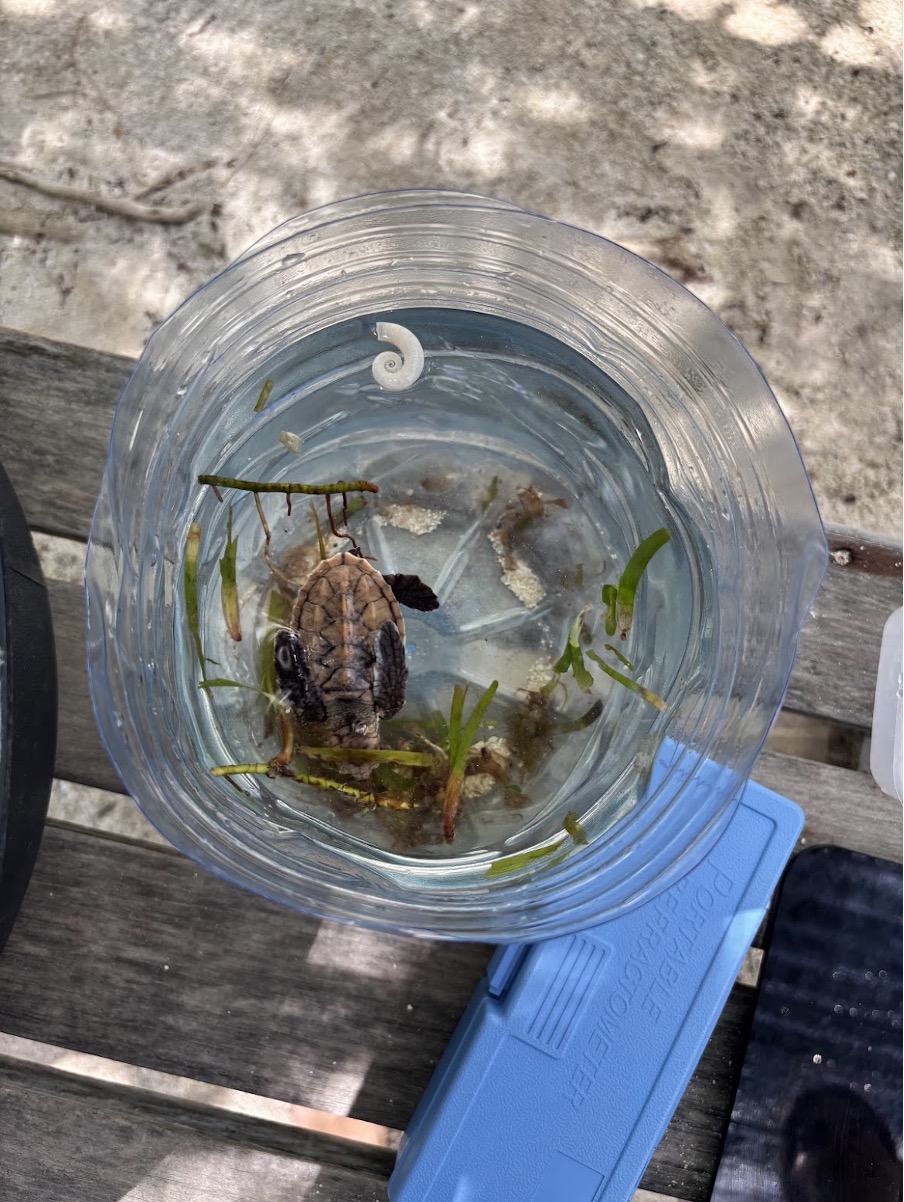
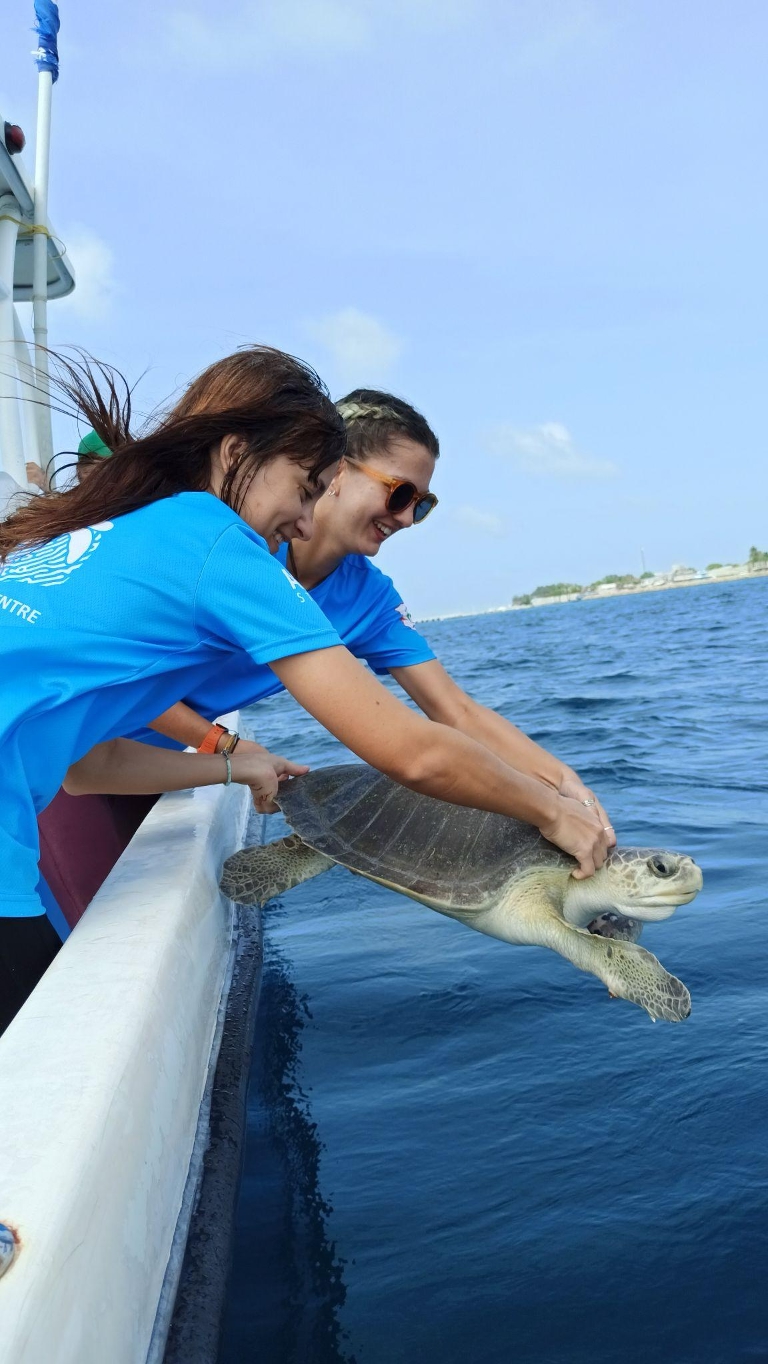
Since 2016, all species of sea turtles found in Maldivian waters have been protected under the Environment Protection Act (4/93), which prohibits keeping them as pets. Although the illegal pet trade in sea turtle hatchlings appears to be far less common today, it remains a latent threat to these species. The incidence of other anthropogenic threats led AMC to expand its focus beyond hatchlings to rescuing and rehabilitating sea turtles of all life stages affected by human activities in 2016. Since then, more than 50 turtles have been successfully rehabilitated and released back into the ocean, most of them following entanglement in marine debris.
Entanglement Season
Entanglement is the leading cause of admission to sea turtle rescue centres in the Maldives. The most common culprits are abandoned, lost, or discarded fishing gear, commonly known as ghost fishing gear. However, we also receive turtles trapped in a wide variety of other materials, with woven polypropylene bags being another particularly common cause. Unfortunately, many entanglement victims lose at least one limb, and it is not unusual for multiple limbs to be affected.
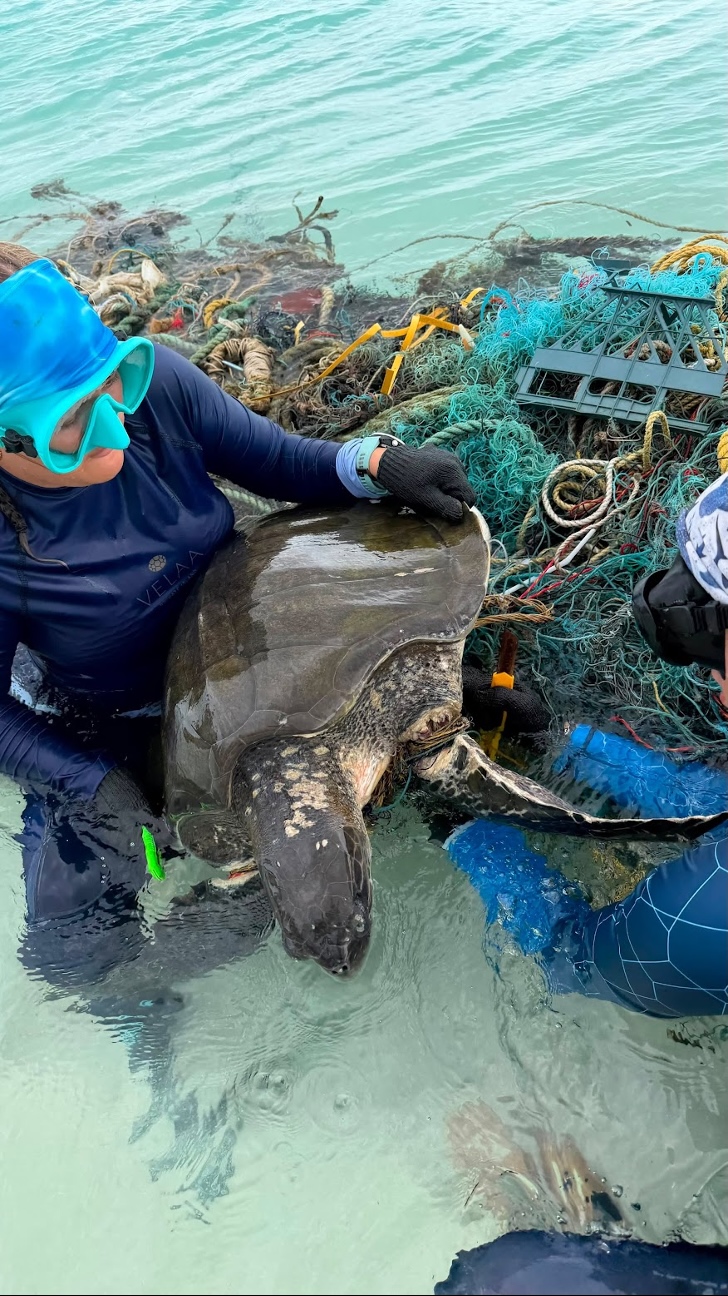
The majority of our entanglement patients are olive ridley turtles, a trend that has remained consistent over the years. Due to their pelagic behaviour, olive ridleys are likely to become entangled in the open ocean before drifting towards the Maldives with ocean currents during the northeast monsoon. At AMC, we refer to the period between December and April as “Entanglement Season”, when we typically receive the highest number of sea turtle admissions. The most recent entanglement season (December 2025–April 2026) was particularly notable, with seven turtles admitted following entanglement incidents. Five were successfully rehabilitated and released, one remains under our care, and one sadly passed away.
Beyond the Rescue
Every sea turtle that successfully returns to the ocean and can once again fulfil its ecological role is a victory for these endangered species. However, at AMC, we recognize that meaningful marine conservation cannot stop at treating individual animals. As the only sea turtle rehabilitation centre based on a local island in the Maldives, we have a unique opportunity to address the root causes of these threats through education and community engagement.
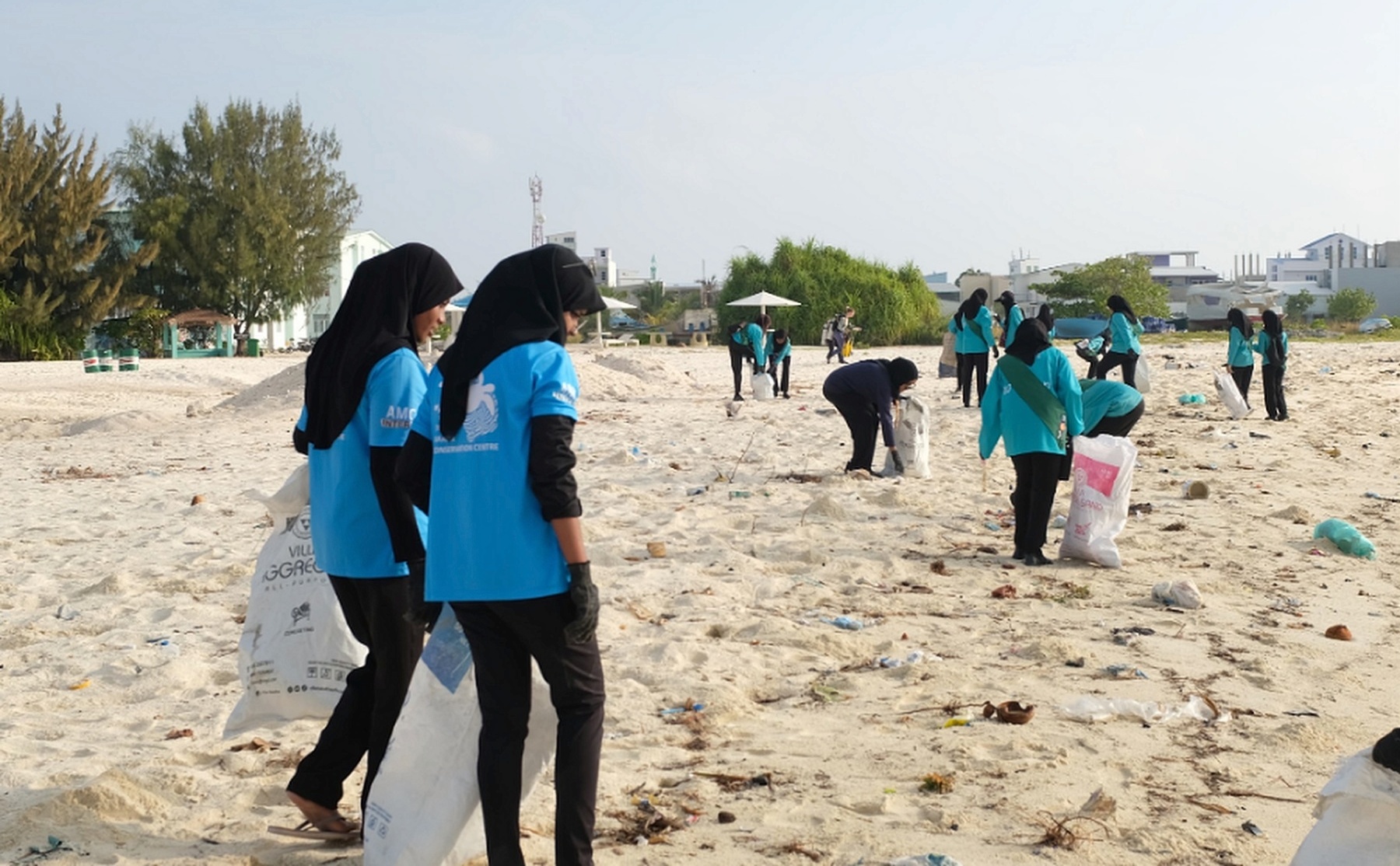
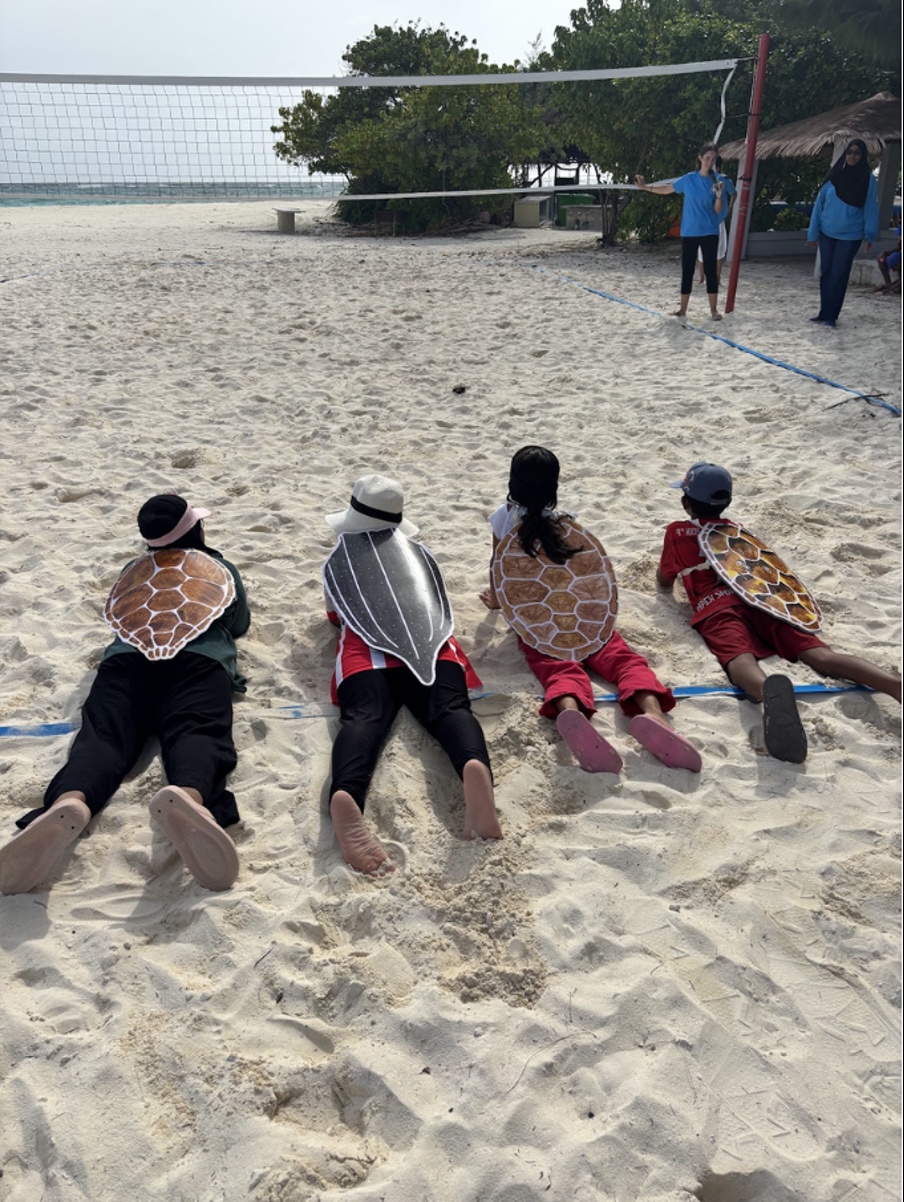
Community outreach and environmental awareness are therefore central to our work. We regularly visit local schools to deliver marine science lessons, providing students with essential knowledge about marine ecosystems while inspiring them to become future stewards of the Maldives’ rich yet fragile marine environment. We also organize different programmes and activities for children and teenagers, raising awareness about the consequences of the illegal pet trade and the importance of responsible waste management.
In addition, we welcome visitors from nearby resorts and offer educational presentations about sea turtles in the Maldives, the threats they face, and how we can all contribute to their protection. Through regular beach and underwater clean-up initiatives, we encourage practical action while promoting a more responsible relationship with the marine environment.
A Long Way from the Buckets
Much has changed since the days of the buckets. Today, we have a multidisciplinary team of professionals from different parts of the world, supported by international volunteers. Our facilities have grown considerably, with larger tanks equipped with an appropriate pumping system and even our own veterinary clinic.
Our growth has undoubtedly been remarkable, but we remain a small organization. Our admission and release figures may not seem particularly extraordinary when compared with those of larger rehabilitation centres. However, every achievement represents an enormous collective effort originating from a small island covering just 0.5 square kilometres.
“We believe that our greatest impact cannot be measured solely by the number of turtles we rescue, but also by the influence we have had on every volunteer, visitor, student, and community member who has encountered our work and become part of our mission.”
By the Atoll Marine Conservation Centre (AMC).
As we celebrate 25 years of the IOSEA Marine Turtle MOU, we showcase some of the people, initiatives and communities that have contributed to marine turtle conservation across the region. Visit our Story Map to discover their stories.