From Perth to Manila: How a Regional Vision for Marine Turtles Became Reality
The story of the IOSEA Marine Turtle MOU is not only about turtles. It is also a story of diplomacy, cooperation, and a shared recognition that marine turtles do not respect political boundaries—and that their conservation therefore cannot stop at national borders.
As the Memorandum of Understanding on the Conservation and Management of Marine Turtles and their Habitats of the Indian Ocean and South-East Asia (IOSEA Marine Turtle MOU) celebrates its 25th anniversary, it is worth looking back at the remarkable process that brought governments together to create a regional framework for conserving marine turtle populations that migrate across the IOSEA region.
By the late 1990s, growing concern about declining populations of the region's six marine turtle species had highlighted a fundamental challenge: no single country could conserve these highly migratory species alone. While many countries already had national measures in place, governments began recognizing the need for a coordinated regional approach that could strengthen conservation across migration routes and habitats.
Throughout the process, the CMS Secretariat helped maintain momentum by facilitating communication among participating countries, supporting the development of draft texts, and organizing the successive meetings that ultimately produced the MOU and its Conservation and Management Plan.
Perth 1999: Laying the Foundations
The journey began in Perth, Australia, from 19-22 October 1999, when representatives from 22 countries across the Indian Ocean and South-East Asia gathered to discuss the need for a regional conservation mechanism. Experts from CMS, IUCN, ASEAN and other organizations also participated.
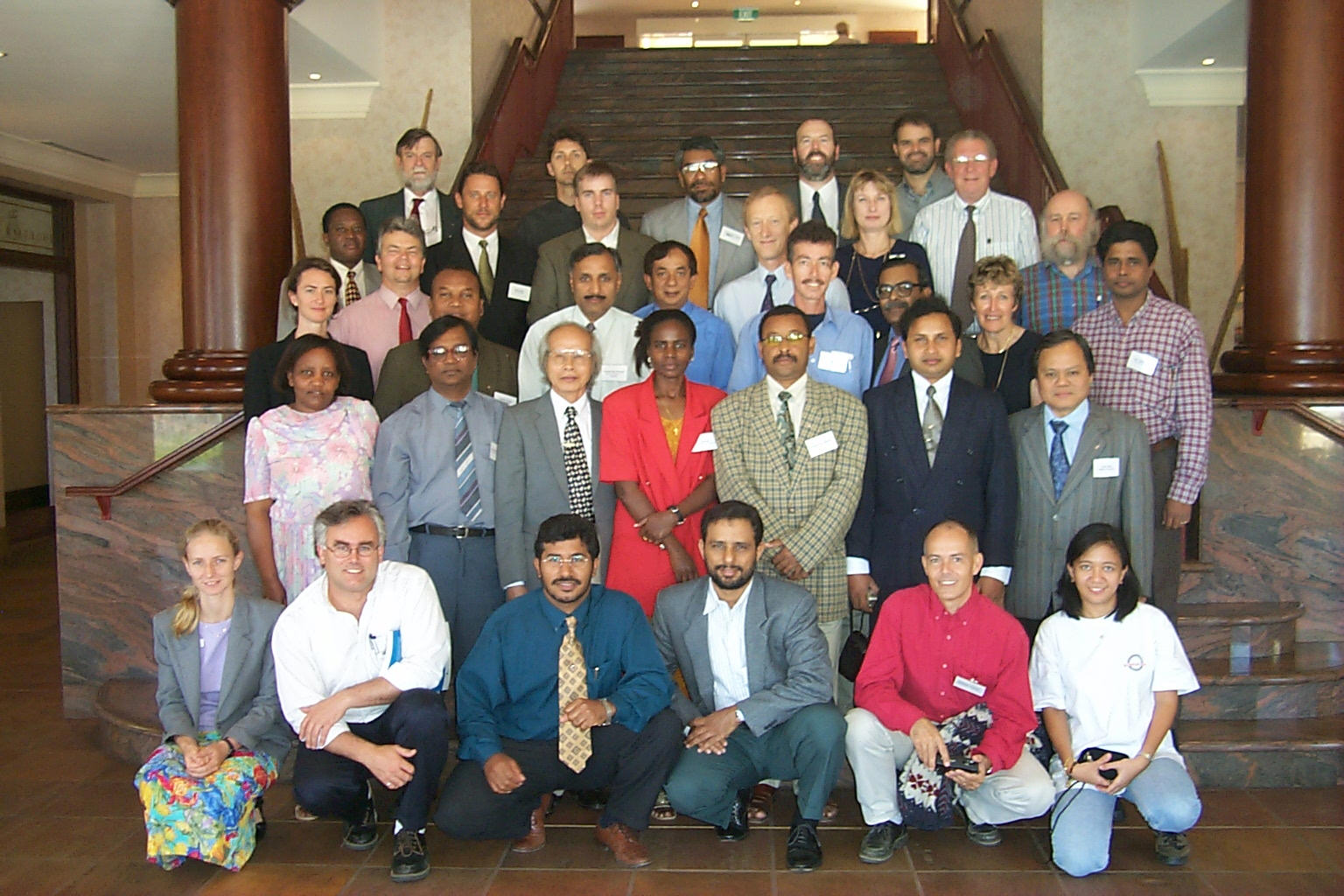
The Perth meeting was as much about building a common understanding as agreeing the way forward. Participants reviewed marine turtle biology, migration patterns, conservation challenges, existing agreements and successful management approaches. Discussions highlighted the extraordinary movements of marine turtles across ocean basins and reinforced the need for coordinated action.
A major outcome was the consensus that a new regional instrument should be developed, establishing the vision, principles and political consensus needed. Importantly, delegates agreed that the arrangement should be non-binding, at least initially, enabling governments to join more quickly while building confidence and cooperation. They also agreed that the instrument should build on existing regional initiatives, involve both CMS Parties and non-Parties, and be supported by a small secretariat.
The Perth meeting adopted a Resolution (Attachment 1 of the report) calling for the development of an "Indian Ocean and South East Asian Regional Agreement on the Conservation and Management of Marine Turtles and their Habitats" and requested further negotiations to conclude an instrument as soon as possible.
Kuantan 2000: Turning Ideas into an Agreement
The second intergovernmental meeting took place in Kuantan, Malaysia, from 11-14 July 2000. If Perth had defined the vision, Kuantan was where governments transformed that vision into a functioning agreement. Following the Perth meeting’s request, Australia prepared a first draft of the proposed instrument, which was circulated in advance and served as the basis for formal negotiations. Delegates from 24 countries worked through the text article by article, grappling with issues that remain central to international environmental governance today: participation by states within and beyond the region, arrangements for administration and funding, and mechanisms for conserving highly migratory species that spend much of their lives crossing national boundaries and the high seas. Through these discussions, governments refined the draft and ultimately reached consensus on the text of the Memorandum of Understanding.
Several important decisions emerged. Governments agreed that participation should not be limited to countries within the region, allowing support from interested States beyond it. They also decided that the instrument should be developed under the auspices of CMS, providing an established institutional framework and interim secretariat support. In addition, delegates agreed that implementation would eventually be supported by a dedicated Secretariat and Advisory Committee.
Perhaps most importantly, the text of the Memorandum of Understanding itself was finalized by consensus. However, delegates recognized that the agreement would only be effective if accompanied by a detailed programme of action. The task of completing that programme – the Conservation and Management Plan (CMP) – was therefore left to a final negotiating session.
Manila 2001: Completing the Vision
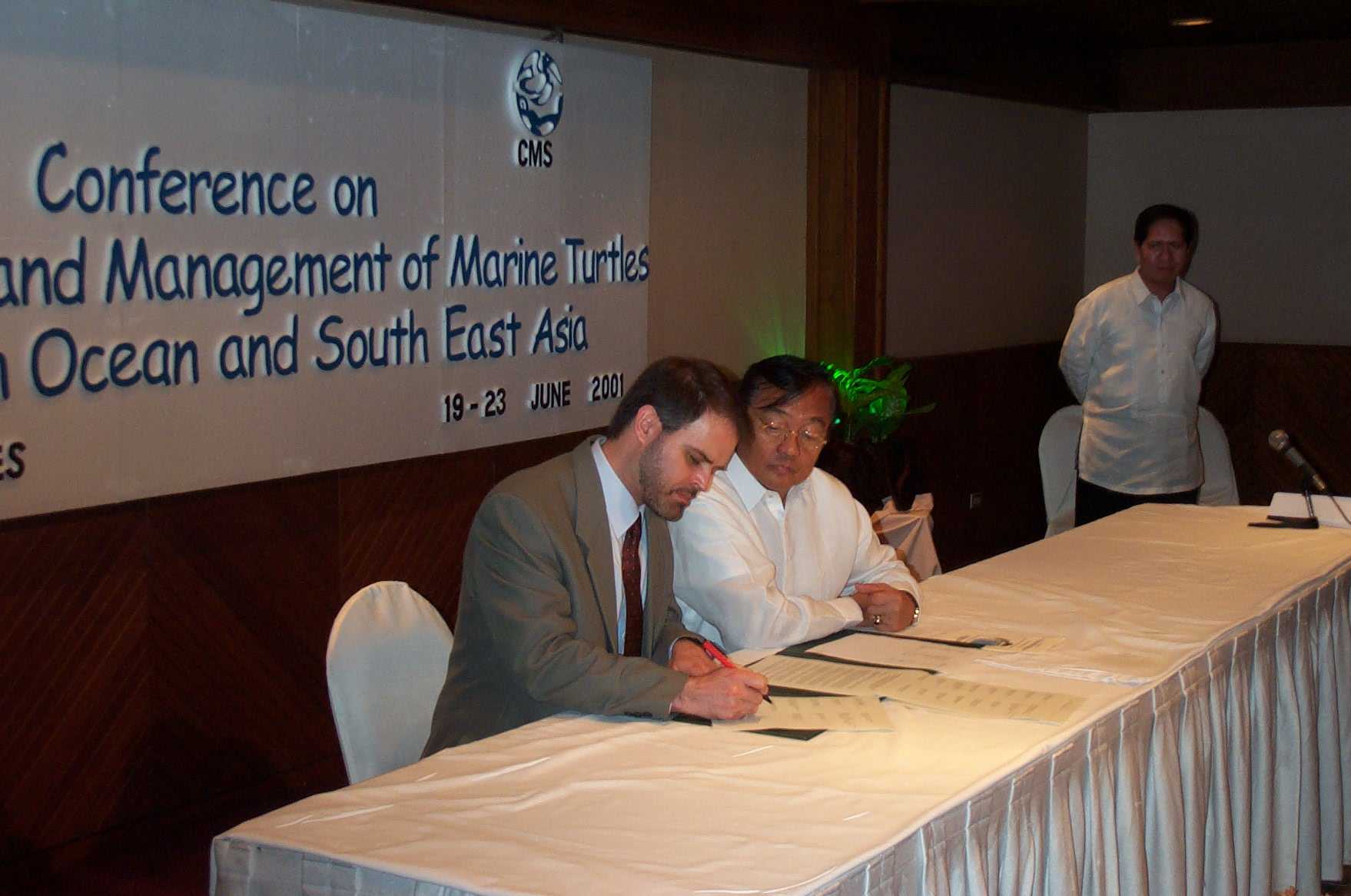
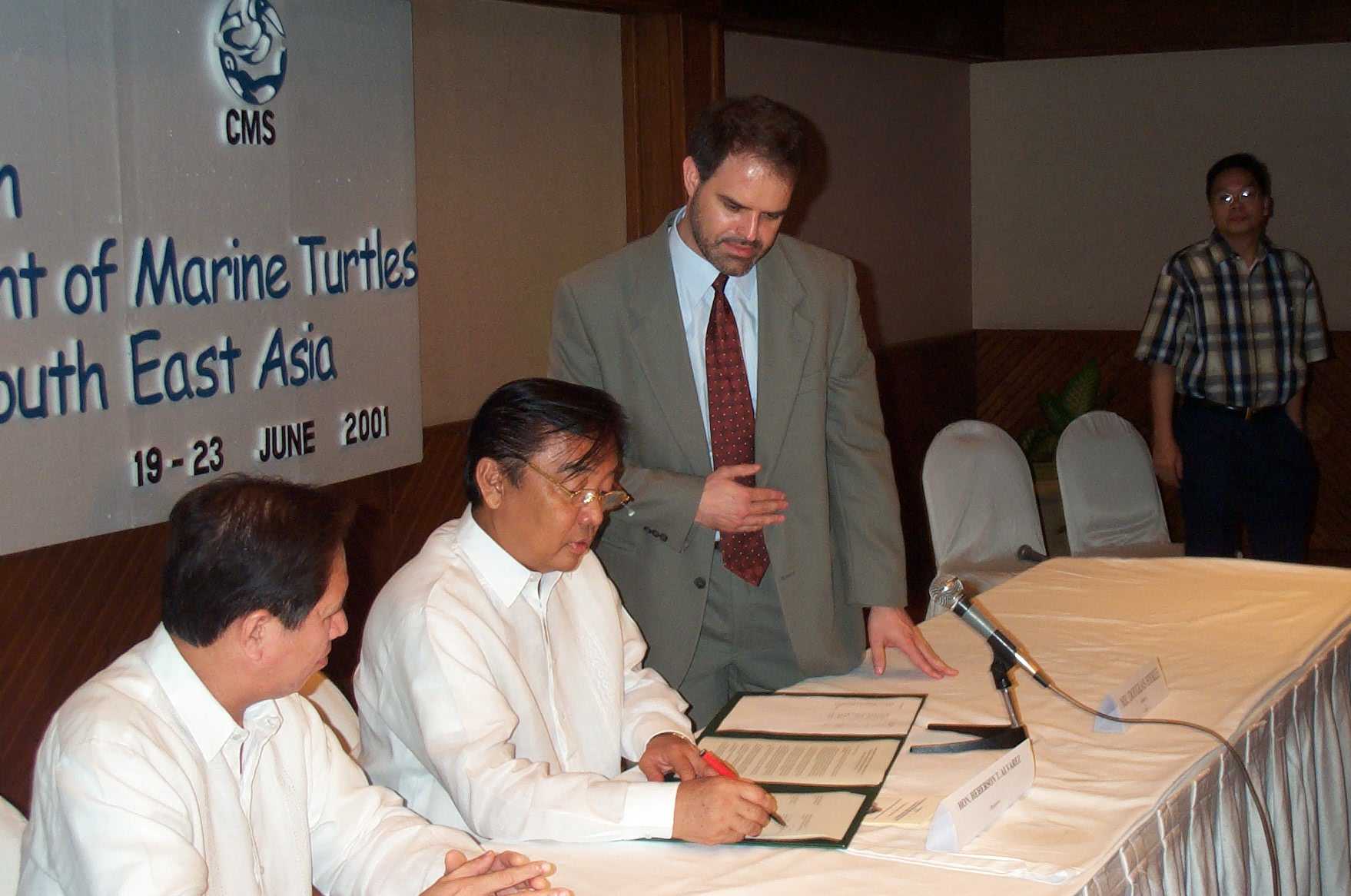
The final chapter unfolded in Manila, Philippines, from 19-23 June 2001, a meeting attended by delegates from 21 countries.
With the text of the Memorandum of Understanding already agreed, delegates focused on finalizing the Conservation and Management Plan (CMP). Building on a draft circulated already the previous year, three working groups refined the CMP into a comprehensive framework comprising six objectives, 24 programmes and 105 actions that would guide implementation of the agreement.
The meeting also made key decisions regarding implementation. Delegates endorsed arrangements for a permanent Secretariat and accepted UNEP's offer to host it at the UNEP Regional Office for Asia and the Pacific in Bangkok, providing office space, operational support and initial funding assistance. Australia and the United States pledged additional support to help launch the Secretariat.
Although some countries expressed an aspiration for a legally binding agreement in the future, participants maintained the original approach agreed in Perth—a practical, non-binding instrument designed to encourage broad participation and rapid implementation.
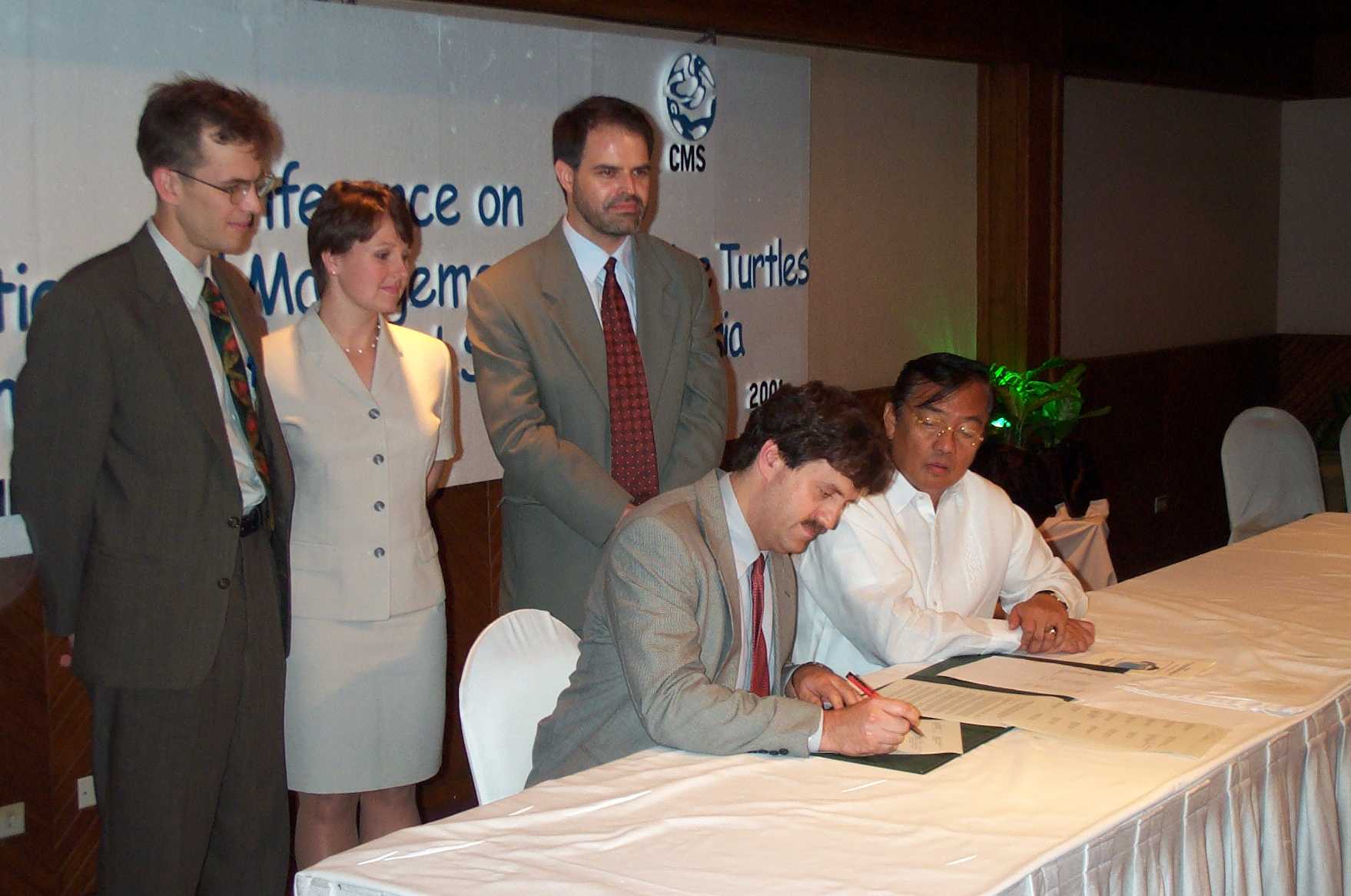
Then came the historic moment: At the close of the meeting, eight countries – Australia, Comoros, the Islamic Republic of Iran, Myanmar, the Philippines, Sri Lanka, the United Republic of Tanzania and the United States of America – signed the Memorandum of Understanding. The signatures brought the IOSEA Marine Turtle MOU into existence, paving the way for its entry into effect on 1 September 2001. Viet Nam became the ninth signatory shortly afterwards.
25 Years of Collaboration for the Conservation of Marine Turtles
"IOSEA came about thanks to a confluence of factors that prevailed at the time: a well-defined conservation need, political will and sustained support -- underpinned by expertise in the realms of marine science and diplomacy. The fact that most countries of the agreement area signed on to the MOU in the first decade of its existence is a testament to its solid foundation."
- Douglas Hykle, who guided the development of the IOSEA MOU during his tenure as CMS Deputy Executive Secretary and served as its first Coordinator
Looking back 25 years later, the three meetings reveal an impressive achievement. Governments with diverse cultures, conservation priorities, legal systems and development challenges worked together over less than two years to create a regional framework covering a huge and diverse region.
From the initial discussions in Perth, through the negotiation of the MOU in Kuantan, to the completion of the CMP and first signatures in Manila, the process combined science, diplomacy and practical action. Today, the IOSEA Marine Turtle MOU continues to support cooperation on conservation challenges that extend beyond the jurisdiction of any single country.
This article is one of a series celebrating the 25th anniversary of the IOSEA Marine Turtle MOU. Please refer to all here:
- From Perth to Manila: How a Regional Vision for Marine Turtles Became Reality
- The IOSEA Marine Turtle MOU – 25 Years of Collaboration for the Conservation of Marine Turtles
- Marine Turtles: Unique and Amazing Travellers
- Protecting Marine Turtles Takes a Village... and a Common Vision
As we celebrate 25 years of the IOSEA Marine Turtle MOU, we showcase some of the people, initiatives and communities that have contributed to marine turtle conservation across the region. Visit our Story Map to discover their stories.
Gallery images