
The IOSEA Marine Turtle MOU – 25 Years of Collaboration for the Conservation of Marine Turtles
For 25 years, the IOSEA Marine Turtle MOU has united governments, partner organizations, experts, communities and countless individuals in a shared effort to conserve marine turtles and their habitats. This anniversary is a celebration of what we have achieved together, and an invitation to continue shaping the next chapter of marine turtle conservation across the Indian Ocean and South-East Asia region.
Today, on 1 September 2026, the Memorandum of Understanding on the Conservation and Management of Marine Turtles and their Habitats of the Indian Ocean and South-East Asia (IOSEA Marine Turtle MOU) marks 25 years since its entry into force. Established under the auspices of the Convention on the Conservation of Migratory Species of Wild Animals (CMS), the MOU was created to provide a regional framework through which States and partners could work together to conserve marine turtles and the habitats on which they depend.
Over the past quarter century, the MOU has brought together governments, scientists, conservation practitioners, local communities, intergovernmental organizations, non-governmental organizations and many others across one of the world's most important regions for marine turtles. While much has changed since 2001, the principle at the heart of the MOU remains the same: effective conservation requires cooperation across borders and across sectors.
As we commemorate this milestone, we also celebrate the people, partnerships and shared commitment that have sustained the MOU and helped advance marine turtle conservation throughout the Indian Ocean and South-East Asia.
A Framework for Regional Cooperation
 Marine turtles are among the world's most migratory species. During their lives, they move through the waters of multiple countries and across vast stretches of ocean, linking ecosystems, communities and nations. Their conservation therefore depends not only on national action but also on regional cooperation.
The IOSEA Marine Turtle MOU was established to support that cooperation. Today, it provides a platform through which Signatory States and a wide range of stakeholders can exchange knowledge, coordinate activities, build capacity and work towards common conservation goals.
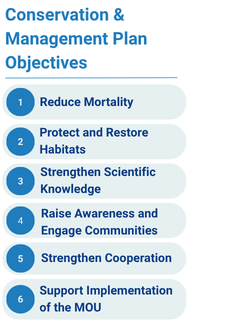
The MOU's mission is to promote the protection, conservation, recovery and sustainable management of marine turtles and their habitats through coordinated regional action. Guided by its Conservation and Management Plan, the MOU supports efforts to reduce threats, protect and restore important habitats, improve scientific understanding, engage communities, strengthen collaboration and support effective implementation.
This is not a luxury: marine turtles are vital to the health and resilience of the oceans. Through their feeding and migrations, they help maintain productive seagrass beds, support balanced coral reef communities, regulate parts of the marine food web and transport nutrients between the sea and coastal ecosystems. Protecting marine turtles therefore brings wider benefits for biodiversity, fisheries, coastal communities and the many species that depend on healthy marine habitats.
Turning Commitment into Action
Over the past 25 years, the MOU has helped create opportunities for joint and coordinated action on issues that no country can address alone. It has provided a forum for sharing experience and expertise, promoted regional dialogue, supported scientific and technical exchange, and encouraged collective responses to common challenges. Accordingly, one of the defining features of the IOSEA Marine Turtle MOU is that its story has been written by many hands.
Meetings of Signatory States set priorities and review progress; the Advisory Committee provides scientific, technical and policy advice; and the Secretariat, based within the CMS Family in Bonn, facilitates coordination and information exchange. Governments and their partners translate regional commitments into action nationally and locally.
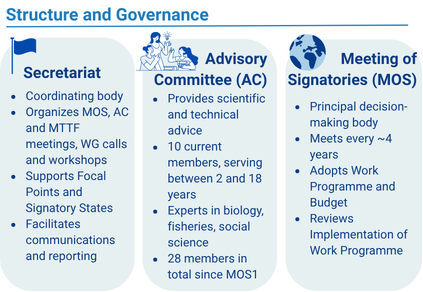
At the heart of the MOU are the Signatory States themselves. The commitments and priorities agreed through the MOU are translated into action through the efforts of national governments and their partners, working within their own environmental, social and economic contexts. Likewise, the recommendations and guidance developed by the Advisory Committee support, but do not replace, the responsibility of governments to determine and implement appropriate conservation measures. This balance between regional cooperation and national implementation reflects a fundamental principle of international environmental agreements: shared objectives are achieved through action taken by governments and partners at the national, subregional and regional levels.
Two Marine Turtle Task Forces are important vehicles for this work. The Western Indian Ocean Marine Turtle Task Force, established in 2007 as a partnership between the MOU and the Nairobi Convention, promotes implementation of the Conservation and Management Plan and provides an inclusive forum for reviewing progress and coordinating regional priorities. The Northern Indian Ocean Marine Turtle Task Force, established in 2015, brings together governmental, scientific and non-governmental expertise to strengthen subregional cooperation, develop joint priorities and support practical conservation action.
Together, these structures and processes have enabled the MOU to connect people and institutions with a common interest in marine turtle conservation, creating a strong and enduring regional network.
Some of the Key Achievements
- Hawksbill Turtle Single Species Action Plan: A regional framework addressing unsustainable use and trade of hawksbill turtles in South-East Asia and the Western Pacific, co-developed with CMS and adopted by IOSEA Signatory States in 2024.
- Flipper Tag Series Database: An initiative that ensures the origins of tagged turtles can be easily identified across the region.
- IOSEA Site Network: Established under the MOU to promote the long-term conservation of sites important to marine turtles and their habitats, the network now includes 15 accepted sites.
- Green turtle recovery: After four decades classified as Endangered, the green turtle was reclassified in 2025 by IUCN as Least Concern—the first endangered marine turtle to move into a non-threatened category. This major recovery is the result of sustained action by many governments, communities, researchers and conservation organizations. The IOSEA Marine Turtle MOU can share in this achievement through its contribution to regional cooperation and coordinated conservation across much of the species’ range, while recognizing that some regional populations remain threatened.
Celebrating a Milestone, Continuing the Journey
This anniversary offers an opportunity to recognize the governments, researchers, conservation organizations, communities, donors and individuals whose sustained commitment has transformed the MOU from a regional agreement into an active platform for cooperation. The accompanying infographic traces key milestones, partnerships and achievements from its 25-year journey, illustrating how a shared vision has helped translate international commitments into practical conservation action across the region.
Yet this anniversary is not a finish line. Despite important achievements, the road ahead remains long and difficult. Full recovery of the six marine turtle species found in the IOSEA region will require sustained action against fisheries bycatch, habitat loss and degradation, illegal and unsustainable take, pollution, coastal development and climate change. Because marine turtles migrate across national borders and depend on habitats in many jurisdictions and beyond, no country or organization can secure their future alone.
Douglas Hykle, who guided the development of the IOSEA MOU during his tenure as CMS Deputy Executive Secretary and served as its first Coordinator, shared some reminiscences in a career retrospective written in 2014. At the time, he mentioned a number of fundamental issues which the MoU would need to address in order to realise its full potential. Among them: integrating concerns of local communities that depend on natural resources, focusing on tangible implementation and monitoring of already agreed actions; and achieving genuine cooperation and coordination among conservation actors. Asked to comment on the occasion of IOSEA’s 25th anniversary, he remarked that IOSEA would do well to take stock of progress made in each of these areas and to rededicate itself to achieving them over the next decade.
Continued international cooperation among governments, scientists, conservation organizations, local and Indigenous communities, fishers, the private sector and other stakeholders will be essential to align priorities, share knowledge and resources, and turn regional commitments into effective action. These efforts to implement the IOSEA Marine Turtle MOU also contribute to wider global goals, including the Samarkand Strategic Plan for Migratory Species, the UN Decade of Ocean Science for Sustainable Development, and the Kunming-Montreal Global Biodiversity Framework.
The MOU’s enduring vision remains: healthy marine turtle populations, resilient habitats and effective stewardship across the region.
As we celebrate this milestone, we extend our sincere thanks to all those who have contributed to the MOU's work over the past quarter century. Whether you have been involved from the beginning or joined more recently, your efforts form part of a continuing story. We invite you to explore the accompanying infographic, reflect on the achievements of the past 25 years, and help shape the next chapter of the conservation of marine turtles and their habitats.
This article is one of a series celebrating the 25th anniversary of the IOSEA Marine Turtle MOU. Please refer to all here:
- From Perth to Manila: How a Regional Vision for Marine Turtles Became Reality
- The IOSEA Marine Turtle MOU – 25 Years of Collaboration for the Conservation of Marine Turtles
- Marine Turtles: Unique and Amazing Travellers
- Protecting Marine Turtles Takes a Village... and a Common Vision
As we celebrate 25 years of the IOSEA Marine Turtle MOU, we showcase some of the people, initiatives and communities that have contributed to marine turtle conservation across the region. Visit our Story Map to discover their stories.
| Adjunto | Tamaño |
|---|---|
| IOSEA Infographic_25.pdf | 6.42 MB |