The Turtles that Kept Coming Back: Bycatch and Safer Releases in Zighy Bay, Oman
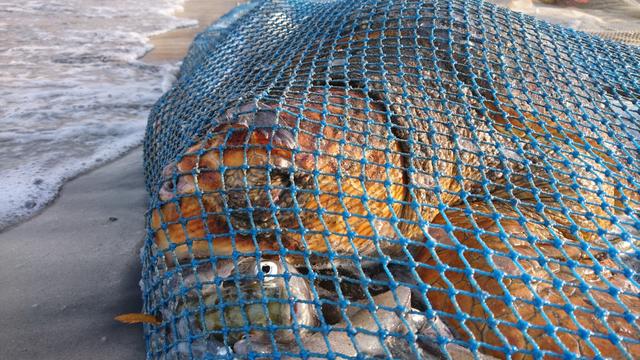
In the waters of Zighy Bay, Oman, fishing nets can sometimes bring up an unexpected catch.
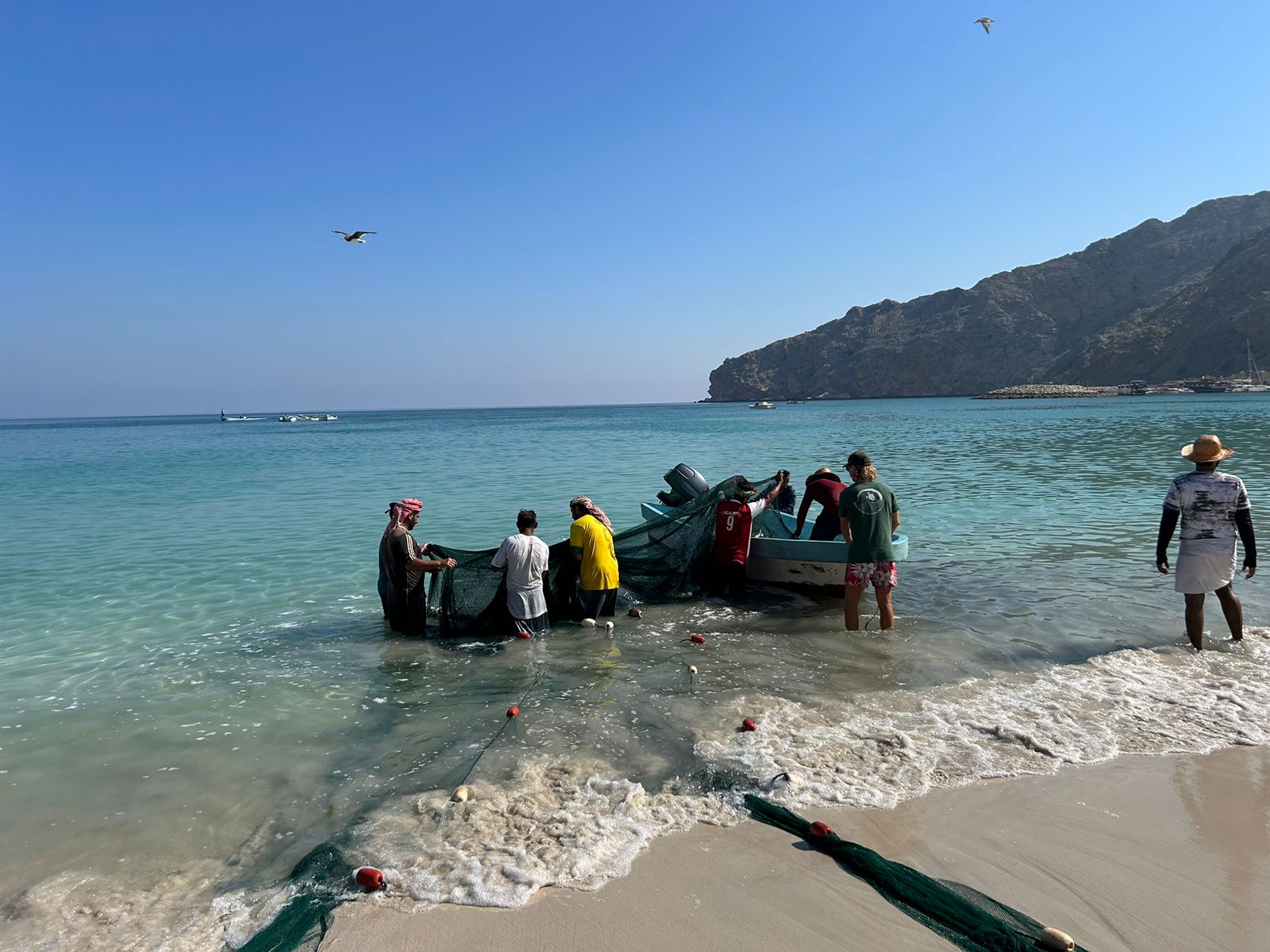
For the small fishing community of this coastal village on the Musandam Peninsula in northern Oman, the sea has provided a livelihood for generations. But the same nets used to catch fish can also entangle sea turtles, rays and other marine wildlife.
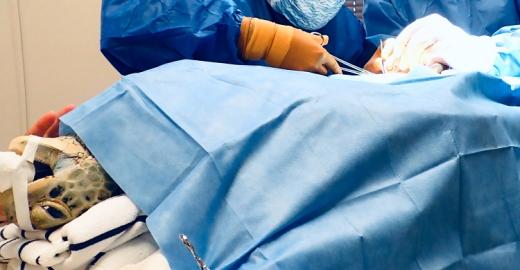
Bycatch is one of the biggest threats facing sea turtles around the world, yet we still don’t know much about what happens in many small-scale coastal fisheries, including those around the Arabian Peninsula. In Zighy Bay, the Olive Ridley Project is working to understand where these interactions occur, what happens to the animals caught in them, and what can be done to give them a better chance of survival.
Building a Relationship
Since 2019, the Olive Ridley Project (ORP) and Six Senses Zighy Bay (SSZB) have been working together to monitor sea turtles and respond to entanglement incidents in Zighy Bay. Alongside turtle monitoring, this partnership has also built up an important record of bycatch involving turtles, rays, and occasionally other marine wildlife.
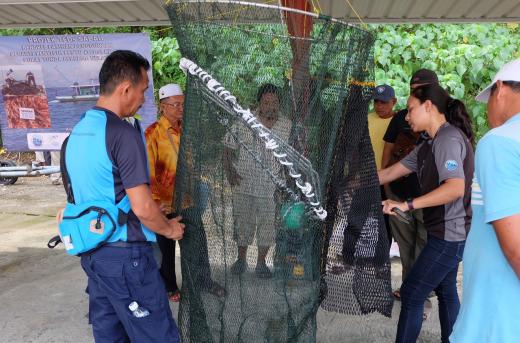
Fishers mainly operate close to shore using nets to target fish species. But as in many fisheries around the world, non-target species can sometimes become caught in the same gear. Whenever possible, ORP staff work with local fishers to document these incidents. Information such as species, condition, and date is recorded ad hoc, while turtles are photographed for photo identification (photo ID). This allows individual turtles to be recognised and tracked over time through ORP's long-term photo ID monitoring programme.
While these records do not capture every bycatch event occurring in the area, they provide the first local picture of how marine wildlife interacts with fishing activities in Zighy Bay. They also reveal an equally important part of the story: the role of local fishers in conservation.
In small-scale fisheries, fishers are often the first people to encounter a turtle in a net, and their actions can make a significant difference to an animal's chances of survival. Over the last several years, ORP and SSZB have worked to build strong relationships with the fishing community, encouraging reporting of incidents and supporting safe releases whenever possible.
As the relationship has grown, so has the understanding that these turtles are not simply anonymous animals passing through the bay. Through photo-identification, many can be recognised as individuals that have been seen before on local reefs.
The Turtles That Came Back
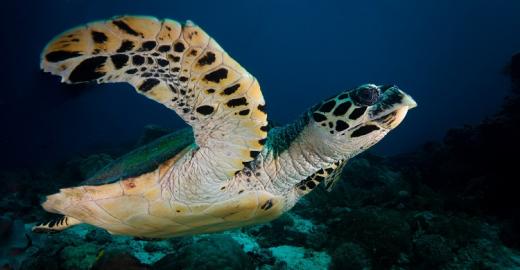
One of the most encouraging things about the programme has been seeing turtles return to House Reef after being caught in fishing nets. Of the 32 juvenile green turtles caught and released, eight have since been spotted again, with some returning more than two years later. Some were back within days, while others have continued to appear in the bay long after their release.
GM283 was back on the reef just two days after being released from a fishing net in February 2025, having already been recorded there several times before its capture. GM276 was spotted again 10 days after its release. For GM065 and GM074, the story has continued over a much longer period. Both turtles were regular visitors to House Reef before being caught as bycatch. Since their releases, GM065 has been recorded another 12 times, while GM074 has been seen 26 times.
These repeated sightings give us a glimpse into what happens after a turtle is caught and released. Rather than being one-off records, they allow us to follow individual turtles over time and see that some continue to use the bay long after a bycatch encounter. It's a reminder of the value of getting turtles safely back into the water and continuing to monitor them afterwards.
What We Have Learnt
These observations provide encouraging evidence that some turtles survive bycatch interactions and continue using local habitats afterwards. They also reinforce the importance of Zighy Bay as a developmental and foraging habitat for juvenile green turtles. The turtles being caught are not simply passing through the area. Many are regular users of the bay.
Although bycatch remains a significant challenge, the work in Zighy Bay demonstrates the value of local conservation partnerships. Perhaps most importantly, this work shows that meaningful conservation does not always require large-scale programmes or complex technology. Strong relationships, consistent monitoring, and community involvement can generate valuable information and help improve outcomes for sea turtles.
As monitoring continues, the growing dataset from Zighy Bay will contribute to a better understanding of bycatch in Oman and support wider efforts to protect sea turtles across the Indian Ocean.
By Jasmine Taberer, Maher Al-Ryami & Stephanie Köhnk.
As we celebrate 25 years of the IOSEA Marine Turtle MOU, we showcase some of the people, initiatives and communities that have contributed to marine turtle conservation across the region. Visit our Story Map to discover their stories.