
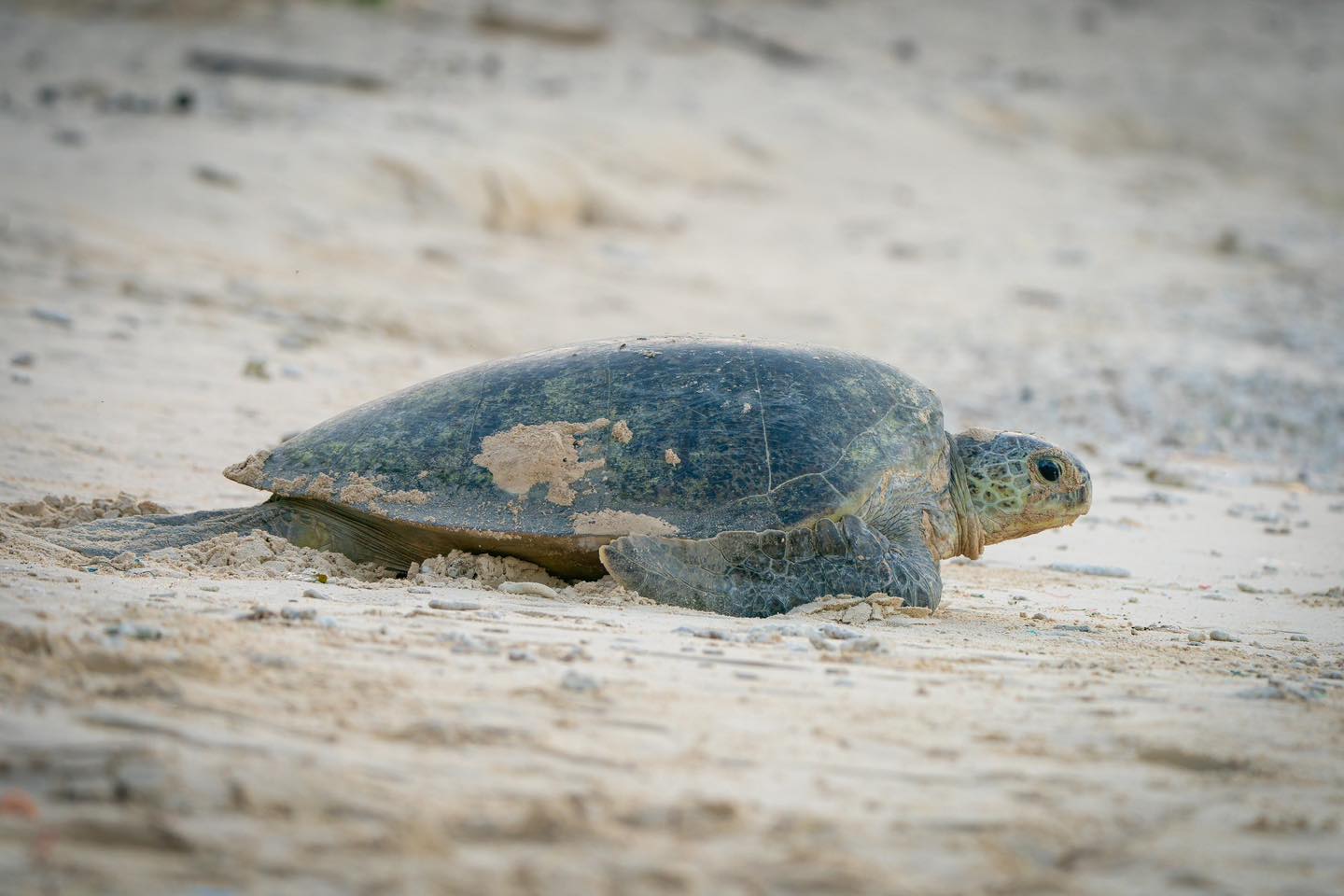
Over Three Decades of Safeguarding Nesting Beaches in Con Dao, Vietnam
For conservationists at Con Dao National Park, the most cherished reward arrives each dawn: watching hundreds of hatchlings scramble out of the deep sand, propelled by tenacious instinct, swiftly braving initial shoreline breakers to plunge into the open sea.
Con Dao National Park, a frontline archipelago in the southeastern waters of Vietnam, is the very first locality in Vietnam to initiate and persistently implement a systematic, continuous marine turtle conservation program, from 1993 to the present. These pristine waters serve as a sacred haven where the nesting population of green sea turtles (Chelonia mydas) accounts for nearly 90% of the total breeding turtles across Vietnam's territorial waters.
Over three decades have passed across 18 white sandy beaches encompassing 24 hectares of nesting habitat. Generations of forest rangers and conservationists have bound their lives to every rhythm of the ocean tide.
This account is not merely a technical log. It tells a story of unyielding faith, profound ecological awakening, sleepless nights braving oceanic squalls, and a triumphant anthem of nearly three million tiny souls safely embarking on their journey back to Mother Ocean.
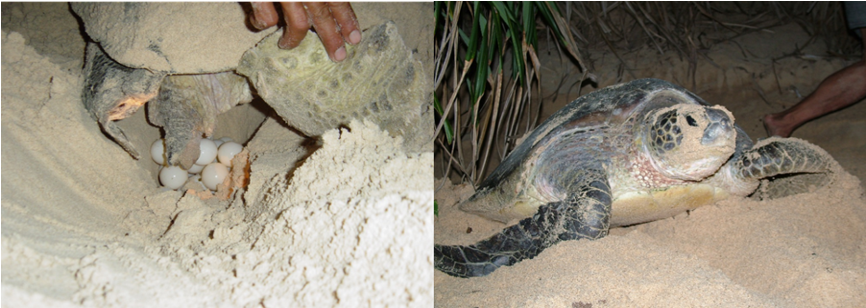
Arduous Times and Ecological Awakening (1987–1993)
Looking back at the logs from before 1987, Con Dao once bore a deeply painful wound. At that time, conservation awareness was rudimentary, and marine turtles were treated merely as commercial commodities for handicraft souvenirs and a source of cheap food. Green turtles and hawksbills were harvested indiscriminately; shells were carved for curios, and clutches were excavated immediately after being laid for local trade. The heartbreaking climax arrived in 1987, when a local handicraft enterprise procured up to 50 hawksbills and 70 green turtles purely to produce handicraft goods.
A historic turning point emerged in mid-1987, following a field mission by the late Professor Vo Quy alongside Ms. Elizabeth Kemf, Senior Conservation Officer and representative of international environmental organizations. The urgent warnings of the scientists regarding the brink of extinction touched the conscience of local authorities and island residents alike. A sequence of foundational policies was promptly enacted: a comprehensive ban on transporting marine turtles and turtle-derived products off the island (1987), strict protection of sea turtles under criminal legislation (1988), and a directive decisively halting destructive nearshore fishing (1989). That was the very first sacred "covenant" established between mankind and the ocean.
Learning By Doing
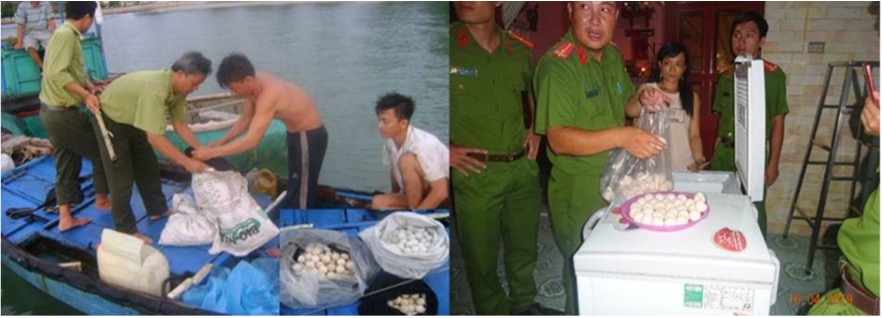
When the formal conservation program commenced in 1993, the pioneering generation of rangers stepped into this battle empty-handed: lacking technical documentation, severely deficient in equipment, and without formal training. Guided by the principle of "learning while acting", rangers established makeshift outposts on remote islets such as Hon Bay Canh, Hon Tre Lon, Hon Cau, and Hon Tai. These guardians took turns keeping nocturnal vigils, trekking dozens of kilometres in utter darkness and guided only by soft red headlamps to shield each clutch from egg poachers and natural predators.
There were nights of raging squalls far off Hon Bay Canh where blinding rain lashed against their faces, yet rangers persistently patrolled the sand dunes, racing against surging tides threatening to wash nests into the sea. Each freshly laid, warm egg was gently transferred into collection baskets and transported across rugged terrain to safe hatcheries. Salty drops of sweat blended with sea sprays, but radiant smiles broke out knowing that fragile lives had been safeguarded through the storm.
When Passion Meets Science
Devotion to nature truly bears fruit when illuminated by rigorous scientific methodology and international solidarity. In 1995, WWF-Vietnam funded the archipelago's first systematic marine turtle conservation project. In 1996, an intensive study tour and training program in the Philippines and Malaysia for 10 Con Dao staff broadened technical horizons, standardizing rescue protocols, clutch relocation procedures, and the establishment of semi-natural incubation hatcheries under strict thermal monitoring.
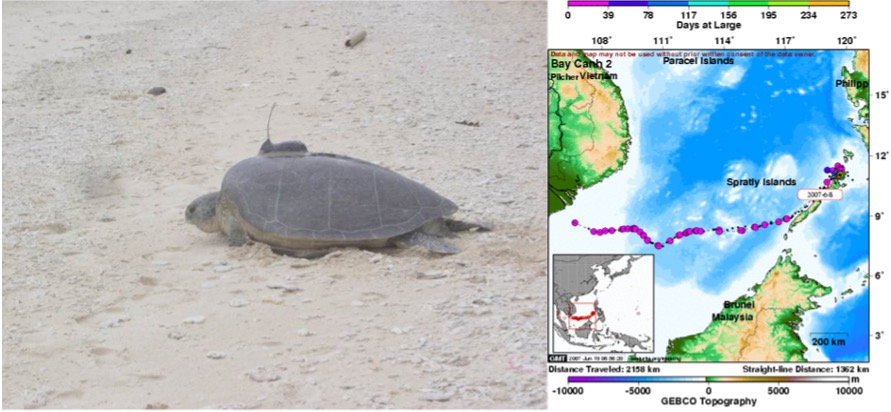
Over 7,700 nesting females have since received flipper tags for biological monitoring. Satellite transmitters deployed on legendary nesting turtles such as Bay Canh 1, Bay Canh 2, Con Son 1, An, Hoa, and Trieu delineated breathtaking journeys: Con Dao turtles traversed thousands of nautical miles across international waters to Palawan (Philippines), Sihanoukville (Cambodia), Pahang (Malaysia), Natuna (Indonesia), Phu Quy, and Truong Sa (Spratly Islands) before swimming back to their natal beaches in Con Dao to lay eggs. This convincingly demonstrates that marine turtles are a shared global heritage that transcends national boundaries.
Joining the IOSEA Site Network (2019)
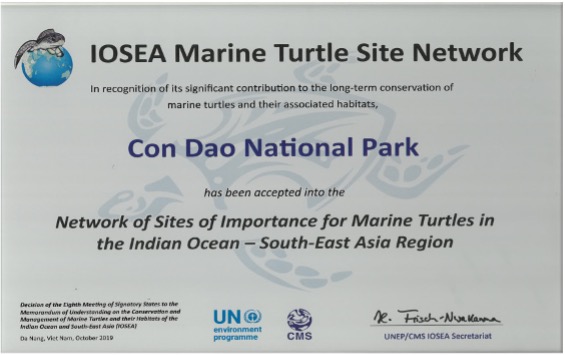
October 22, 2019, marked a proud milestone, when Con Dao National Park was officially recognized and accepted as the 11th member of the IOSEA Marine Turtle Site Network, an earned international accolade honoring persistent, multi-decade stewardship.
The park has not walked this road alone. Between 2016 and 2025, the IUCN Volunteer Program attracted 748 volunteer turns from across Vietnam, who worked alongside rangers to rescue 5,671 nests and release 233,407 hatchlings. At Dat Doc, a pioneering public-private partnership with Six Senses Con Dao has restored nesting grounds directly within the resort beachfront, demonstrating harmonious coexistence between eco-tourism and wildlife protection. Both have been renewed for 2026–2030. Con Dao has also shared its technical knowledge with Nui Chua, Bai Tu Long and Hon Cau, and cooperated with Cu Lao Cham Marine Protected Area to relocate 1,900 eggs, incubated for 40 days at Bay Canh, to hatch successfully in Quang Nam.
Sweet Fruits After 33 Years: A Resurgent Population (1993–2025)
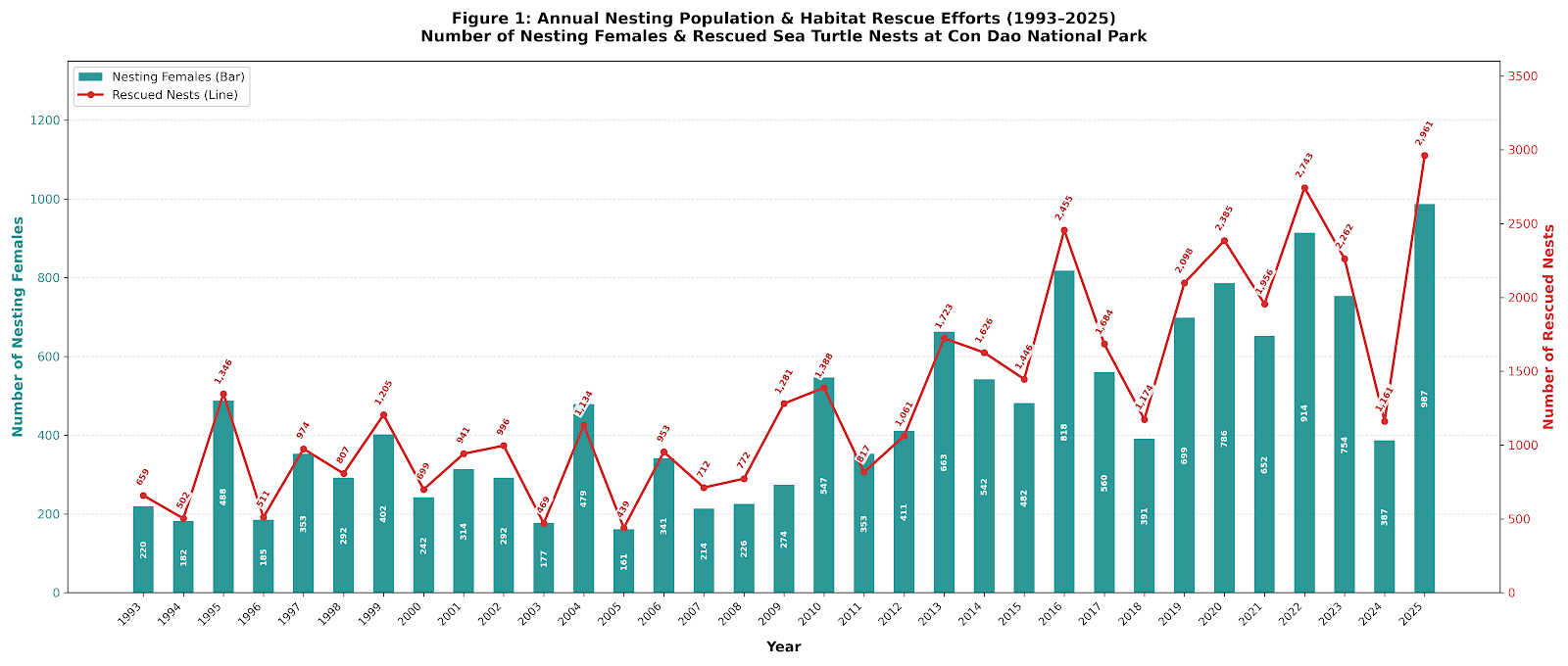
Reflecting on the 33-year uninterrupted timeline (1993–2025), the recovery of Con Dao's marine turtle population is not merely reflected in dry technical records but thrives vibrantly upon each crashing wave*. The 33-year trend exhibits robust growth. During 1993–2007, an average of 290 nesting females was recorded annually. Over 2008–2025, this figure more than doubled to an average of 580 females per year. A historic apex was established in 2025, with 987 nesting females.
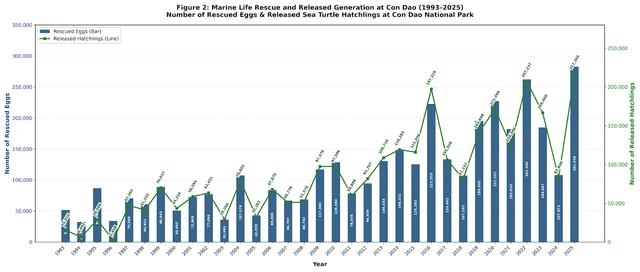
Over 33 years, 2,863,932 hatchlings were successfully incubated and released into the sea. The year 2025 set an absolute record, with 217,266 hatchlings safely entering the ocean. Con Dao National Park proudly retains the National Record: "The National Park that has incubated and released the largest number of marine turtle hatchlings into the wild in Vietnam."
The Survival Puzzle
Behind these brilliant achievements lie pressing concerns facing our ocean guardians against emerging existential challenges. While the green turtle population has staged a powerful recovery, the critically endangered hawksbill (Eretmochelys imbricata) has been absent from nesting beaches since 2002. Only occasional foraging juveniles are encountered around coral reefs, a stern reminder that without persistent vigilance, a marine species can vanish from nesting grounds entirely.
Continuous thermal monitoring indicates that incubation sand temperatures frequently exceed the critical threshold of 30°C. Under climate change scenarios, female hatchling ratios are projected to reach 85–92% by 2050 and risk approaching 100% females by 2100. A population with too few males faces inevitable biological collapse. Con Dao National Park is currently testing natural bio-shading canopies to moderate incubation temperatures.
Sea level rise combined with intense winter monsoonal waves is also driving severe coastal erosion along northwestern nesting beaches, while drifting marine debris and discarded ghost nets continue to threaten foraging turtles through entanglement and plastic ingestion.
A Message for the Future
In the wild, it is estimated that only approximately 1 in 1,000 hatchlings survives the perilous journey to return to its natal beach as a mature nesting female 20 to 30 years later. Yet it is precisely for that miraculous survivor that generations of Con Dao rangers dedicate their lives to this windward outpost.
Over the next 25 years of the IOSEA Marine Turtle MOU, Con Dao National Park pledges to remain a steadfast beacon within the IOSEA Site Network, ready to share data and practical conservation experience with countries across the region. It will champion climate-adaptive solutions, from regulating hatchery temperatures to maintain balanced hatchling sex ratios to nature-based defences against erosion, and establish a Rescue Center for marine turtles, dugongs and marine mammals.
[Photo 6: Thousands of hatchlings embarking on their maiden ocean journey across the sands. Credit: Con Dao National Park]
“Marine turtle conservation is never the lonely crusade of a single individual, island, or nation. It is a symphony of perseverance and international solidarity. Cherish faith and unwavering dedication, for every clutch kept safe is a solemn promise to keep the heart of our blue planet beating forever!”
By Le Hong Son, Department of Conservation and International Cooperation, Con Dao National Park Management Board
(*) This story was condensed and edited by the IOSEA Marine Turtle MOU Secretariat from the author's full report, which includes the complete data tables, figures and monitoring indicators for 1993-2025. The full document is attached to this submission.