
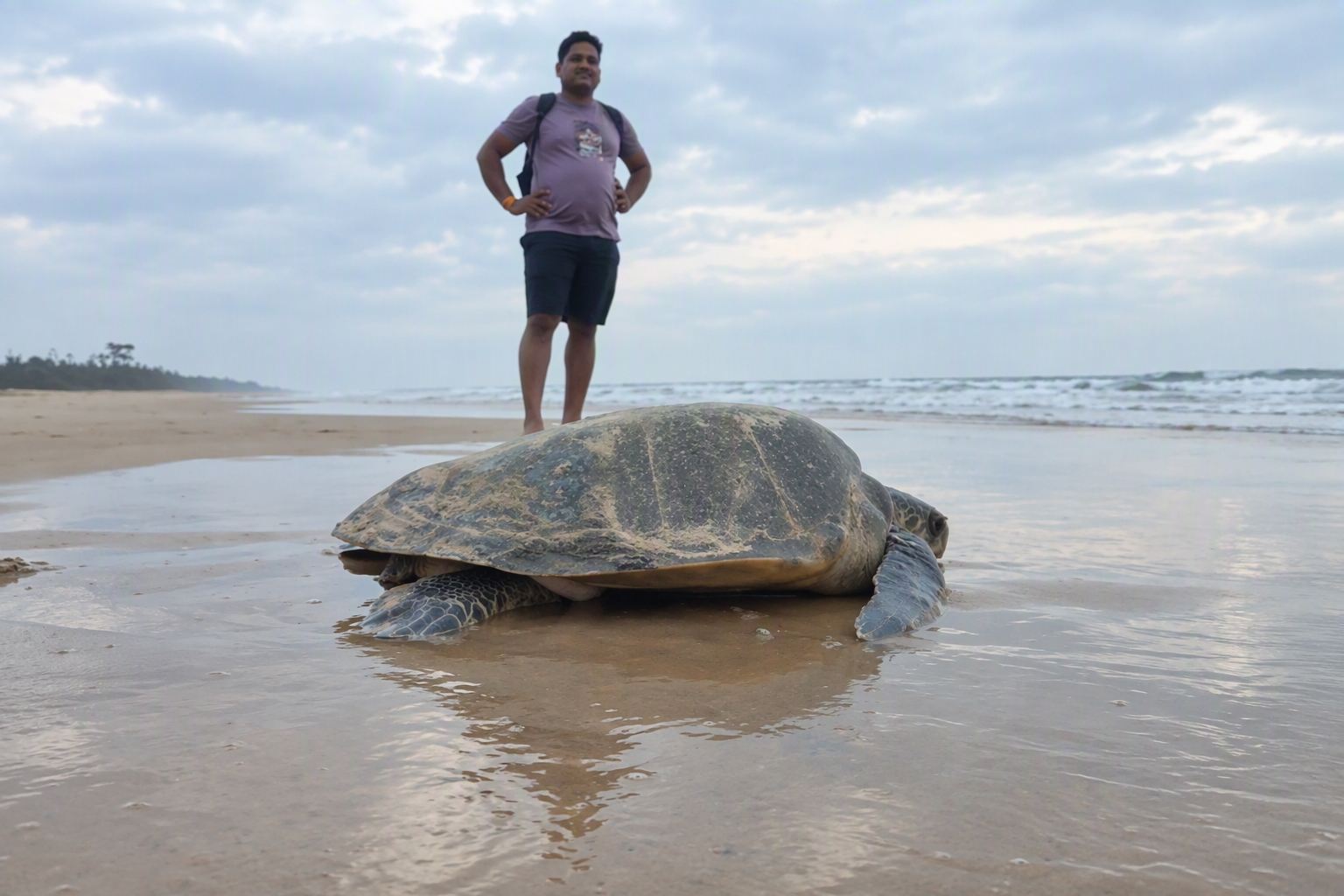
The Beaches No One Was Watching: Community-Led Turtle Conservation in Odisha, India
Every year, Odisha’s coastline becomes the stage for one of nature’s most spectacular phenomena: Arribada, the mass nesting of Olive Ridley sea turtles. As darkness falls, thousands of turtles emerge from the sea to nest on its beaches. It is a remarkable wildlife event that draws the attention of scientists, conservationists and nature enthusiasts from across the world.
There is good reason for this attention. Odisha hosts 90% of India’s Olive Ridley nesting population and 50% of the world's mass nesting events. In 2025, Rushikulya beach alone recorded nearly 698,000 nesting turtles over just eleven days, the highest count documented in more than two decades.*
Olive Ridley turtles are classified as Vulnerable on the IUCN Red List. Protecting them is particularly important because of their natural low survival rate, with only 1 in 1,000 hatchlings reaching adulthood. Along the way, they face numerous threats, including predation of eggs and hatchlings, coastal erosion, habitat loss, accidental capture in fishing gear, marine pollution and unregulated coastal development. Every successful nest and every surviving hatchling therefore matters for the long-term future of the species. The annual arrival of thousands of turtles on Odisha’s shore is rightly celebrated.
Beyond Arribada: The Untapped Opportunity
Yet, hidden behind the mass nesting story, there is a less visible reality. Odisha’s coastline stretches nearly 575 km. The mass nesting beaches of Gahirmatha, Rushikulya and the Devi River mouth, which receive most conservation attention, together account for roughly 60 km, or 10% of the coastline. The remaining 90% tell a quieter story.
Across these other beaches, turtles arrive individually or in small groups in what is known as sporadic nesting. There are no dramatic mass arrivals. No headlines. No large crowds of researchers and visitors. Most nesting happens unnoticed. Yet these beaches remain equally important to the survival of the species.
One such story unfolds along the beaches of Siali-Ramatara (Jagatsinghpur District) and Daluakani (Puri District), a six-kilometer stretch of coastline that, until recently, received little conservation attention. In 2021, Action for Protection of Wild Animals (APOWA) and Transworld began working here with a simple objective: to protect turtles on the beaches that no one was watching.
At the time, around 1,300 turtles were recorded visiting these beaches annually. Compared to the hundreds of thousands of turtles arriving at Odisha’s mass nesting sites, the numbers seemed modest.
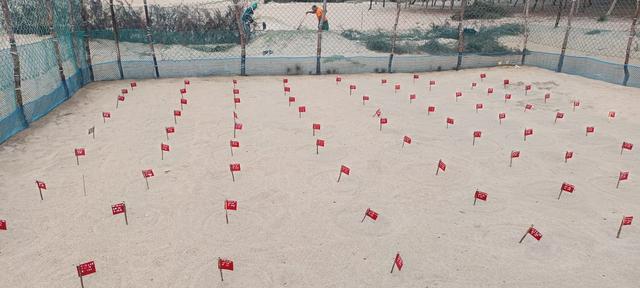
But the years that followed showed what can be achieved when overlooked beaches receive attention. Turtle arrivals more than doubled, from 1,300 turtles in 2021-22 to nearly 2,700 in the 2025-26 nesting season. Nearly 1,500 vulnerable and at-risk nests were relocated to protected hatcheries, safeguarding more than 150,000 hatchlings. Hatching success in these hatcheries improved from 85% in 2021-22 to 91% in 2025-26. Since 2021, nearly one million hatchlings have been safely released into the sea at these beaches.
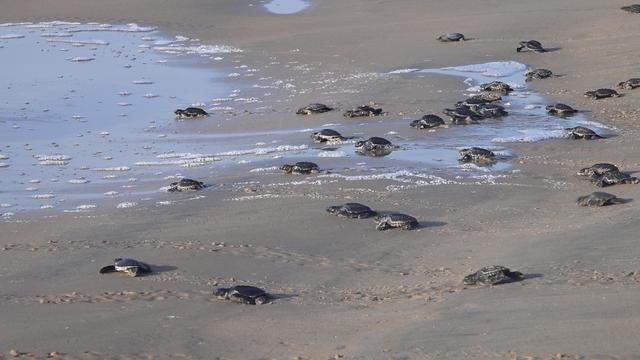
These numbers may appear modest against Odisha’s mass nesting events, but they point to a much larger possibility. The project site covers just 6km, roughly 1% of Odisha’s coastline. If similar protection and monitoring efforts were extended across other sporadic nesting stretches, their cumulative impact could be substantial. Protecting a network of such sites could complement existing conservation efforts at mass nesting beaches and strengthen long-term population resilience. The scale of Odisha’s sporadic nesting beaches may represent one of the largest untapped opportunities in India’s turtle conservation story.
A Different Kind of Conservation Challenge
Protecting sporadic nesting beaches presents a different challenge. Unlike mass nesting sites, conservation here cannot rely on concentrated efforts at a few locations. Turtles nest across long stretches of coastline, often far from public attention.
Government agencies and the Forest Department play a critical role, but given the sheer scale of the coastline, conservation cannot succeed through institutional efforts alone. Protecting these beaches requires something more than conservation teams. It requires communities. The people living along these shores must become active participants and, eventually, custodians of the solution.
However, community ownership does not emerge automatically. The challenge was not simply protecting turtle nests. It was identifying a model that could keep conservation going across long stretches of non-protected, sporadic coastline, even after program interventions end.
Through continuous community engagement, a clear realization emerged: conservation would only thrive if communities saw tangible value in protecting their natural resources. This led to a sustainable community-led conservation model built on two complementary pathways: building a culture of conservation across the community, and creating conservation-linked livelihoods.
Building a Conservation Movement
It started with people. The program brought together fishermen, women, youth and schoolchildren to encourage action and create shared ownership of conservation.
Awareness sessions with fishermen focus on sustainable fishing practices, marine biodiversity and the ecological role of Olive Ridley turtles. These discussions highlight how healthy marine ecosystems support fish populations and contribute to long-term livelihood security for coastal communities.
One important focus area is abandoned and discarded fishing nets, which can continue trapping turtles and marine life long after they are discarded. Fishermen were encouraged to collect waste nets rather than leaving them in the sea or along the coastline. Once collected, the nets were channeled into recycling systems, creating a sustainable disposal pathway while generating a small supplementary income for fishing households. More than 24,000 kg of discarded fishing nets have been recovered and recycled.
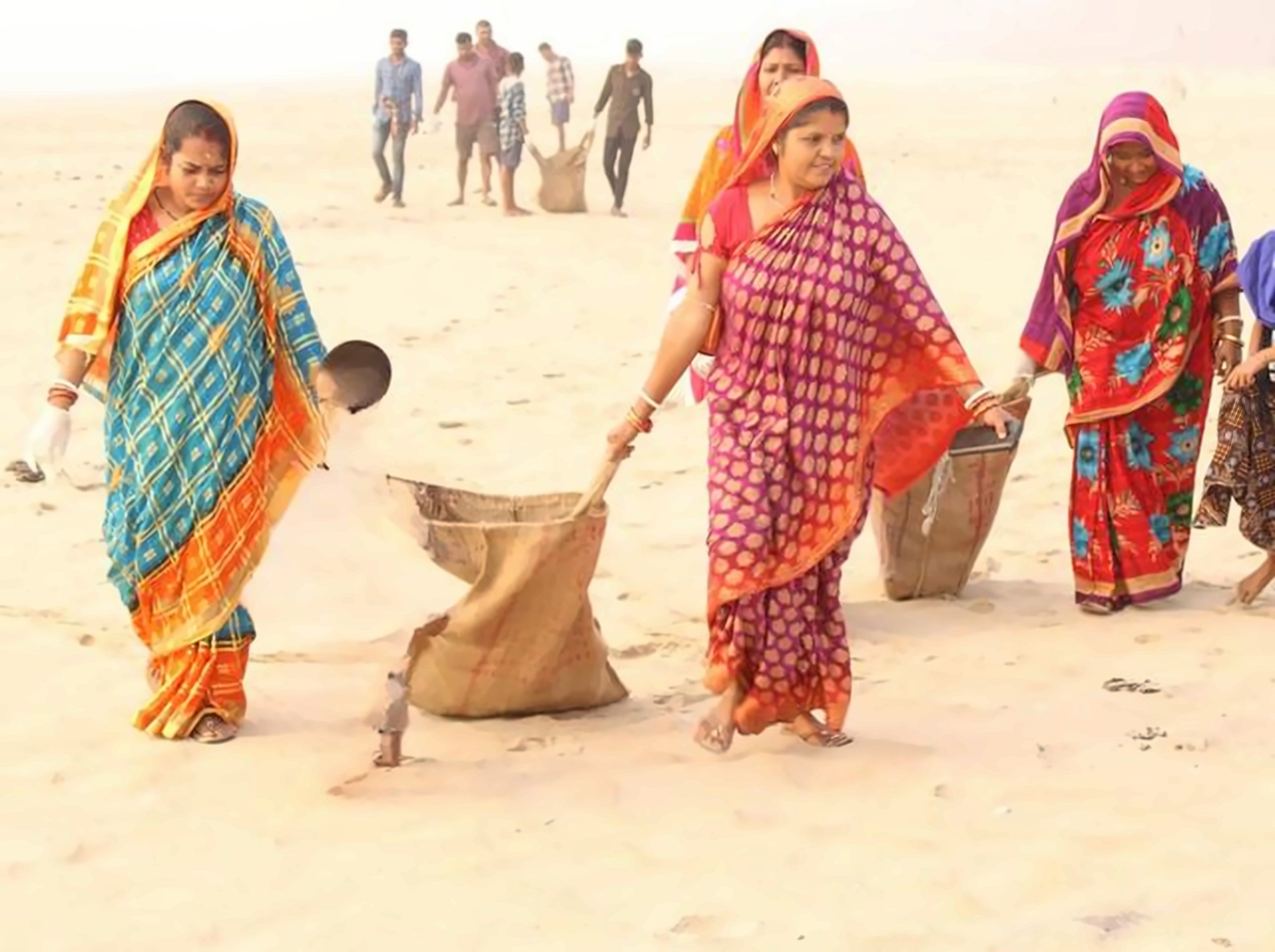
Beach clean-up drives brought together youth groups, women’s self-help groups and children to create safer nesting habitats. Over time, these activities evolved from program-led events into community-led initiatives, removing more than 73,000 kg of waste from nesting beaches.
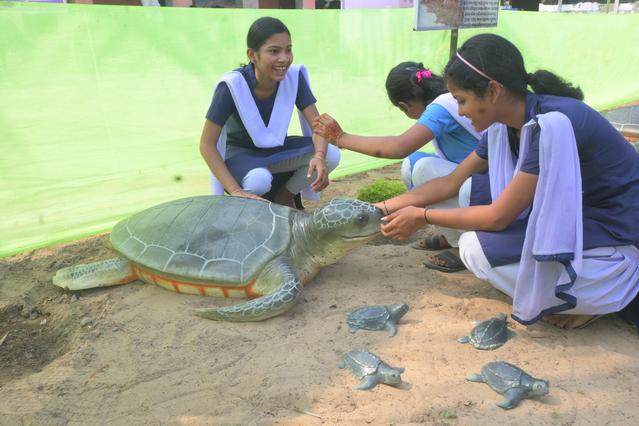
Schools became another important part of the solution. Through awareness sessions, drawing competitions and educational activities, children learned about marine ecosystems, turtle life cycles and biodiversity conservation. Children carry environmental messages into their homes, influence family behaviors and become the next generation of coastal stewards. Annual conservation calendars featuring student artwork keep these conversations alive long after the classroom sessions end.
Linking Livelihoods and Conservation
Fishing remains the primary livelihood in the coastal villages. Each year, the government-imposed seven-month fishing ban (from November to May) protects nesting turtles. But it also limits income opportunities for fishing households.
Rather than treating conservation and livelihoods as competing priorities, the program sought to align them. Local fishermen were trained and engaged as Turtle Guards, creating alternative livelihood opportunities while strengthening conservation outcomes.
At night, the guards monitor nesting activity and collect nesting data. They patrol beaches to protect turtles from predators, protect vulnerable nests and transfer them to hatcheries, rescue injured turtles and safely release hatchlings. Today, more than 50 fishermen have been trained and engaged as Turtle Guards.
The model continues to evolve, and a fishing community-owned homestay initiative is now being developed in Siali village, creating opportunities for responsible nature-based tourism linked directly to turtle conservation. Visitors will be able to experience nesting beaches, local culture and coastal biodiversity through the eyes of the community itself.
In this way, conservation is no longer viewed as a restriction on livelihoods but as a driver of economic opportunity.
A New Model of Shared Stewardship
Since 2021, the program has directly engaged more than 10,000 individuals, including fishermen, women, youth groups, schoolchildren and community members. Yet perhaps the most important outcomes cannot be measured through participation numbers. They are reflected in changing attitudes and behaviors.
Today, fishermen voluntarily report stranded turtles and actively participate in conservation activities. Youth and women’s groups organize beach clean-ups and champion conservation initiatives within their communities. School children advocate for environmental responsibility within their families. And fishermen who once depended almost entirely on seasonal fishing have now become local conservationists.
This willingness to connect livelihood aspirations with ecosystem protection reflects a deeper transformation: conservation is no longer something being done for the community. It is increasingly being done by the community.
As the model has matured, stronger partnerships have emerged with the Forest Department and government institutions. Turtle Guards now work alongside Forest Department officials, coordinating patrols, sharing information and supporting conservation activities on the ground.
What began as a community-based initiative is steadily evolving into a model of shared stewardship. Communities and government agencies are working together to protect Odisha’s marine biodiversity, ensuring that conservation continues long into the future.
Lessons Beyond the Beaches
The lessons from Siali-Ramatara and Daluakani extend far beyond turtle conservation. They remind us that some of the most important opportunities for impact may exist in places that receive little attention.
Perhaps the most important lesson of all is that the future of conservation will depend not only on what we protect, but on how we create environments where people and wildlife can thrive together.
When conservation creates tangible value for local communities, environmental protection ceases to be an external intervention. It becomes a shared responsibility!
“On the beaches no one was watching, communities are now protecting the turtles.”
By Bijaya Kumar Kabi, Action for Protection of Wild Animals (APOWA)
(*) This story was condensed and edited by the IOSEA Marine Turtle MOU Secretariat from the author’s full text, which includes the complete list of sources and references. The full document is attached to this story.
| Adjunto | Tamaño |
|---|---|
| The Beaches No One Was Watching_APOWA_full story.pdf | 344.86 KB |