
“Turtle-geddon”: How a Community Rescued 606 Hatchlings in South Africa
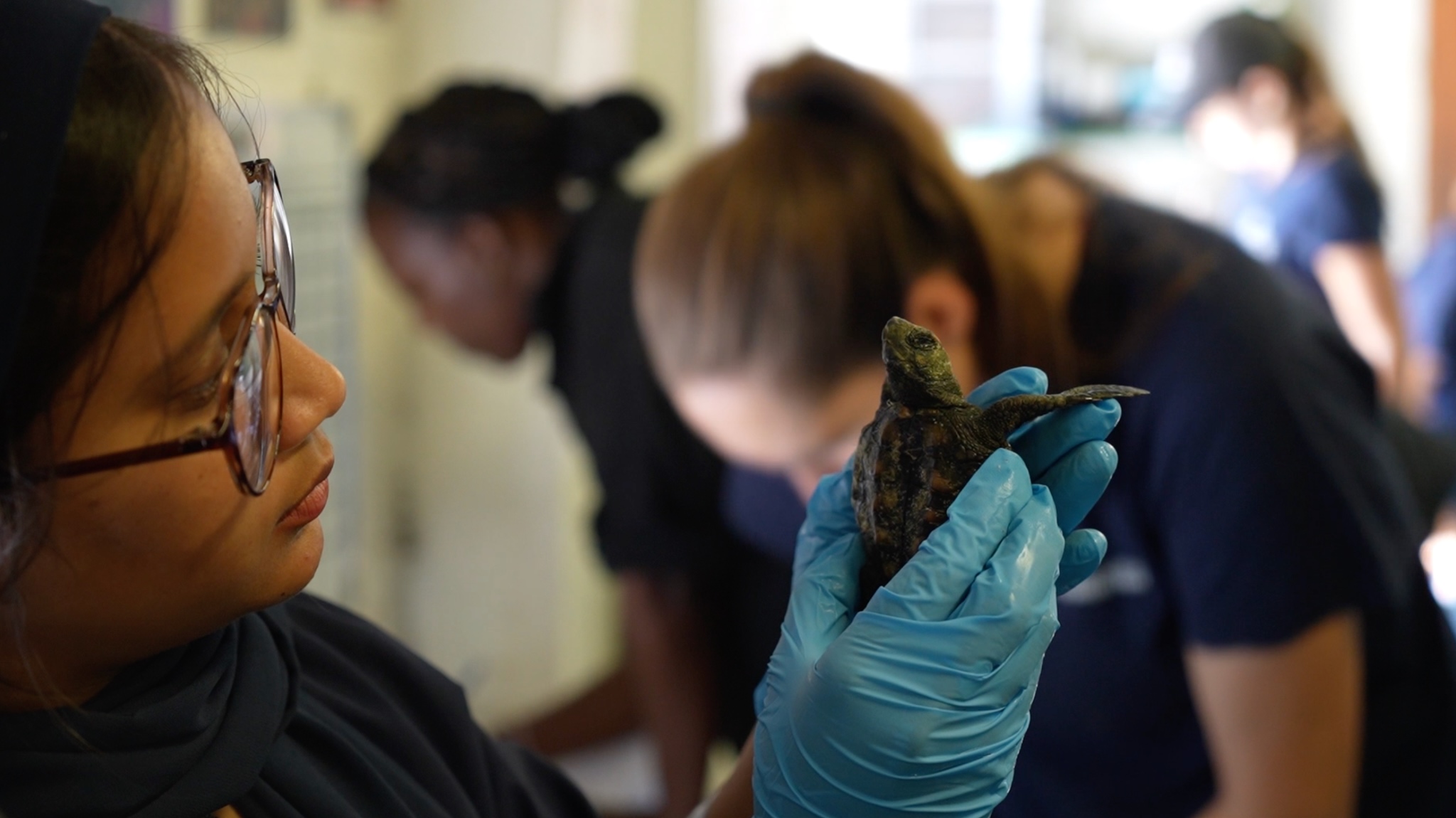
Every year, hundreds of stranded turtle hatchlings are brought to the Two Oceans Aquarium Foundation's Turtle Conservation Centre in Cape Town, South Africa. But in 2024, after intense storms hit the coastline, the team was challenged like never before when over 600 turtle hatchlings washed ashore.
This is the story of how a dedicated community responded to a record-breaking stranding season, giving hundreds of endangered turtle hatchlings a second chance.
What does a normal stranding season look like?
Every year between January and March, thousands of loggerhead and leatherback turtle hatchlings enter the warm, fast-flowing Agulhas Current after hatching on the beaches of northern KwaZulu-Natal, South Africa. The powerful current sweeps them south towards the Western Cape. Near Cape Point, the current turns abruptly – often spitting weaker, compromised hatchlings into the cold, rough coastal waters, where they strand on beaches.
Thankfully, a Turtle Rescue Network is active across the Western Cape coastline. This incredible network of over 2 000 people consists of conservation organisations, local municipalities, community members, and more, all committed to rescuing stranded turtles. From Lambert’s Bay to Gqeberha, the network plays a crucial role in getting turtles to the safety of the Turtle Conservation Centre.
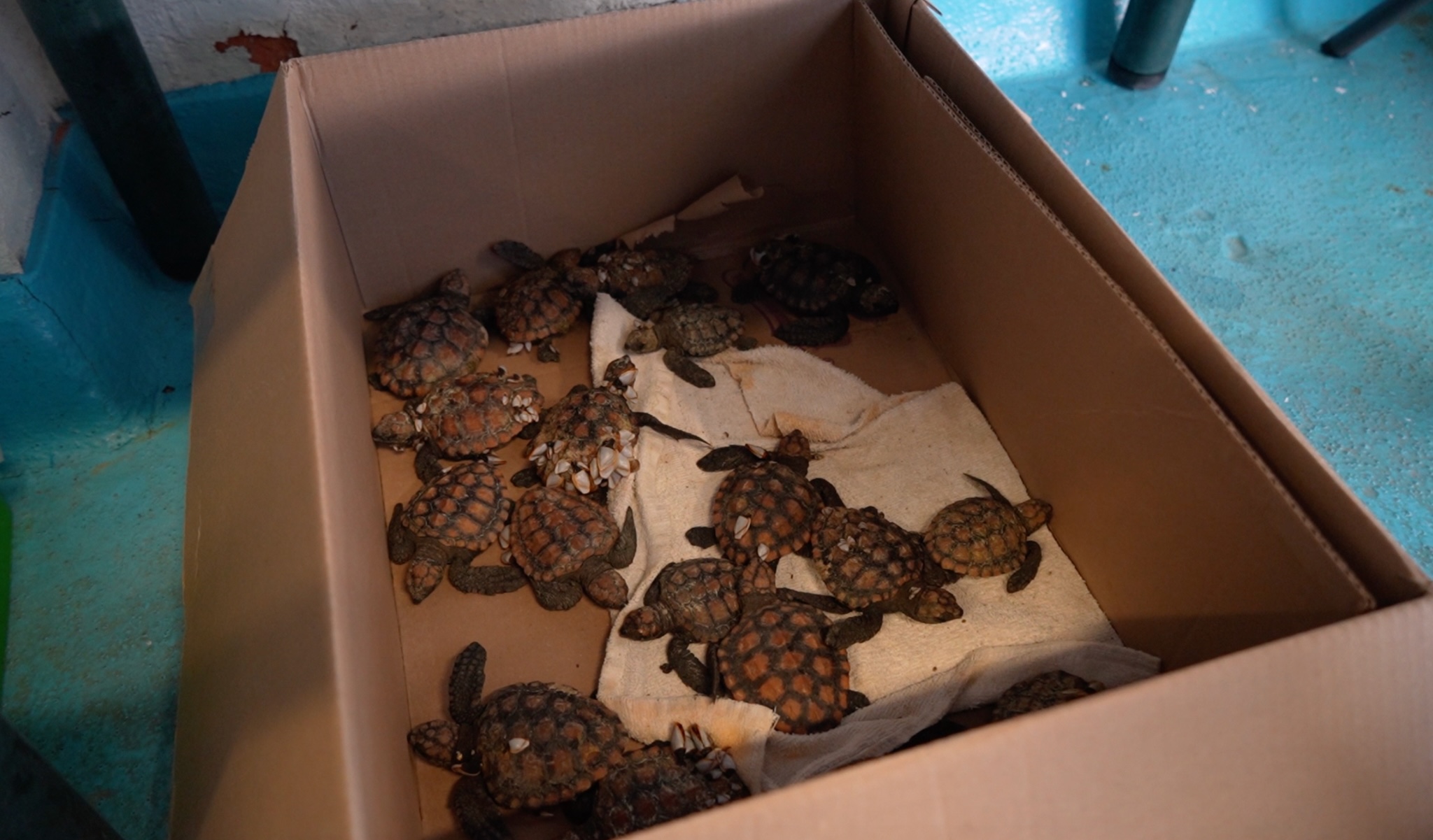
During a typical stranding season, the Turtle Rescue Network may assist with the rescue of up to 200 turtle hatchlings, each rehabilitated over several months before being released back into the ocean. In 2024, the norm was disrupted by “turtle-geddon”.
“Turtle-geddon” incoming…
In April 2024, unseasonal weather hit the Western Cape. Driving rains, extreme storms, and severe ocean conditions coincided with the hatchlings’ journey along the coastline, pushing many off course.
On Sunday, 7 April, the Turtle Conservation Centre had 22 hatchlings in their care. These early arrivals had been rescued in late March, when a few team members commented on the slowness of the stranding season… Little did they know, by Monday, 8 April, they would have 144 hatchlings in rehabilitation. By the following Monday, 15 April, the numbers had skyrocketed to 417.
The rain continued, and so did the hatchlings, their intrepid rescuers braving the beaches to find them. The turtle team coined the phrase “turtle-geddon” when the hatchlings just kept coming, carried in by the hundred in boxes, crates, and buckets.
The last hatchling to arrive at the Turtle Conservation Centre in mid-May was number 606.
Caring for hundreds of hatchlings
With the shell shock of the first big batch wearing off, the Turtle Conservation Centre team quickly adjusted their admission procedures. While the team was familiar with admitting a few hatchlings at once, doing this for hundreds was a completely different story!
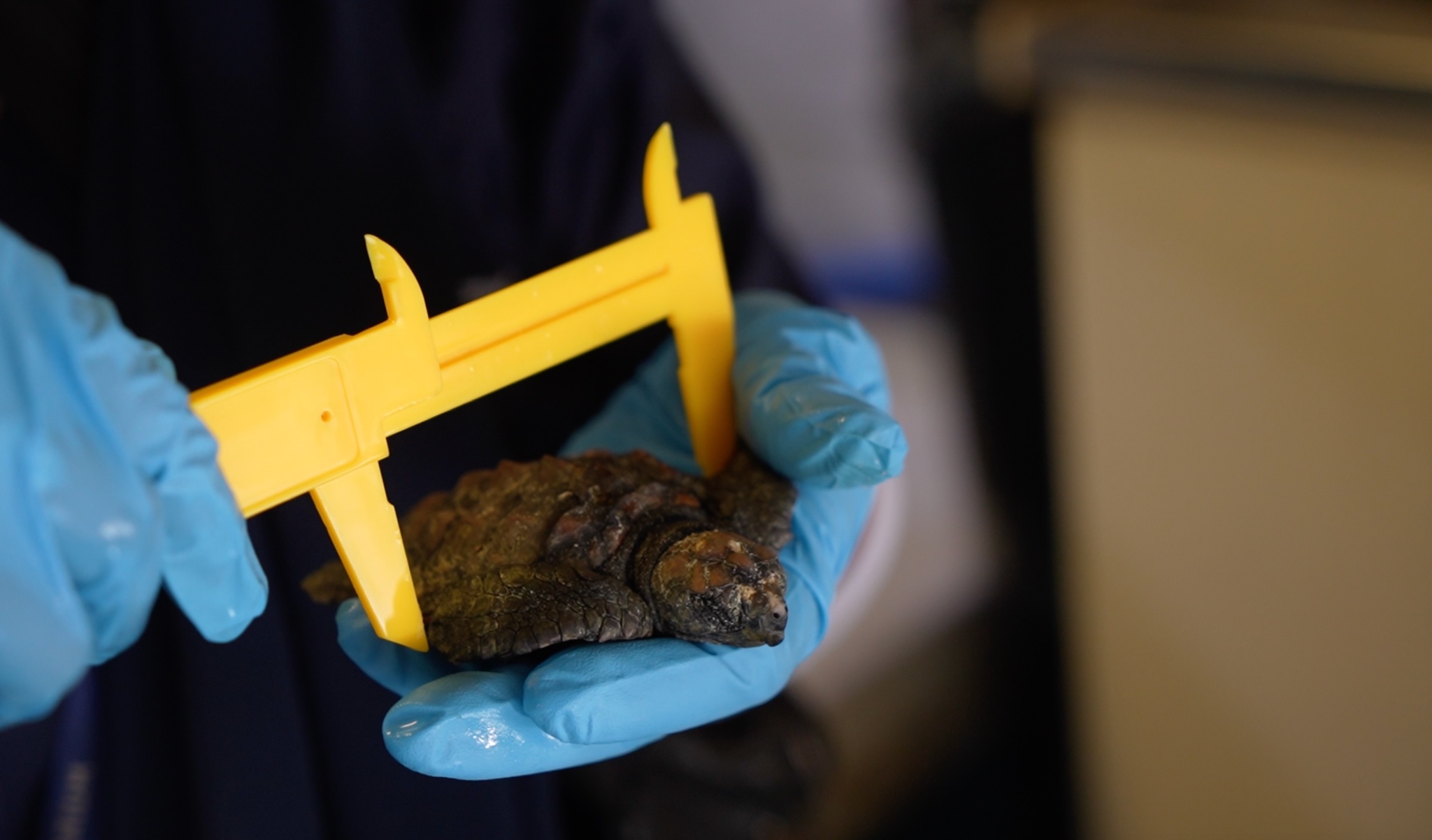
As the hatchlings arrived en masse, the team separated them according to size and condition, prioritising weaker and more compromised turtles. Each hatchling was measured, weighed, assessed, photographed, and assigned an identification number to avoid mix-ups in treatment and handling.
The turtle team also introduced a triaging system according to the severity of their ailments. While some hatchlings were rescued in relatively good condition, others were emaciated and injured. Each turtle was colour-coded depending on its condition and treated accordingly. Red patients required intensive care, with many needing tube-feeding, oxygen, intravenous fluids, or incubators. Yellow patients received regular checkups and medication where necessary, while blue patients were stronger and required less intensive monitoring.
Many hands make lighter work
When the rehabilitation space exceeded capacity fivefold, the Turtle Conservation Centre team began to brainstorm ways to mitigate the issue.
The team reached out to national partners in sea turtle rehabilitation, the South African Association of Marine Biological Research (SAAMBR) in Durban and Bayworld Oceanarium in Gqeberha. Both organisations offered wonderful support by accepting approximately 200 hatchlings for continued rehabilitation and eventual release.
About 400 hatchlings remained at the Turtle Conservation Centre, and fortunately, the Two Oceans Aquarium workshop team helped with their housing. The boat store and roof of the I&J Ocean Exhibit were transformed into additional holding areas, while temporary containers in shared tanks housed weak individuals in the intensive care unit.
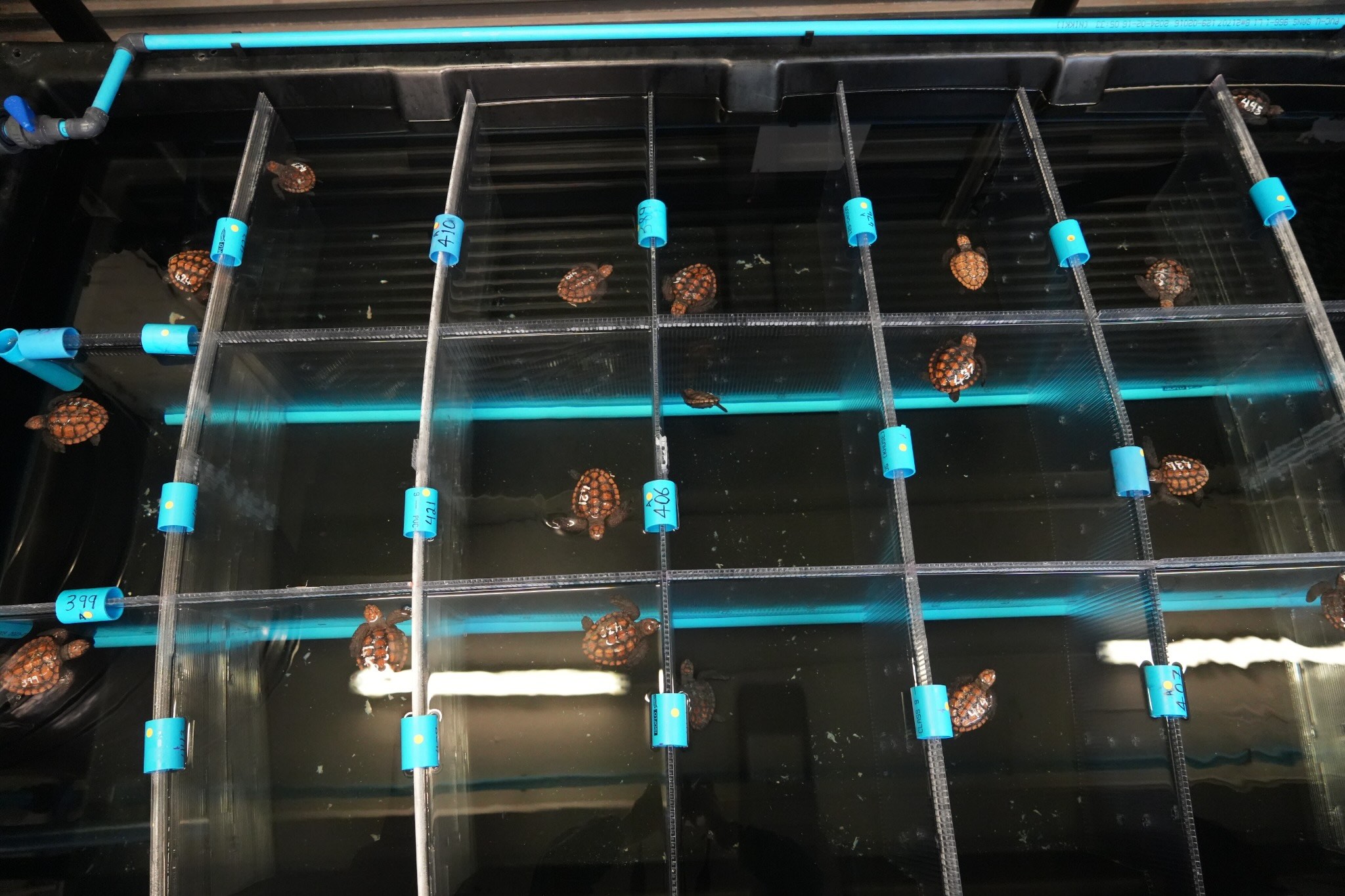
The relatively small turtle team also enlisted volunteers to help with daily demands, from feeding hundreds of hungry hatchlings and monitoring their freshwater baths to siphoning and sterilising each holding pool daily. A fundraising campaign and drive for supplies were met with an outpouring of generosity from the broader turtle community. The team was overwhelmed by the support from turtle supporters far and wide.
“Turtle-geddon” had a happy ending
While tumultuous, “turtle-geddon” was a catalyst for progress: The team improved their medical triaging and systematised their rehabilitation processes. Should this situation arise again, the team will be better prepared!
Most importantly, the story ends happily: Of the 606 turtles rescued, 504 were released back into their ocean home! The remainder included turtles kept in rehabilitation for longer due to ongoing health issues, as well as mortalities caused by plastic ingestion, severe injury, or disease.
The Turtle Conservation Centre is incredibly proud of this extraordinary success. It is a testimony to the excellent care and hard work that went into rehabilitating each hatchling amidst the chaos.
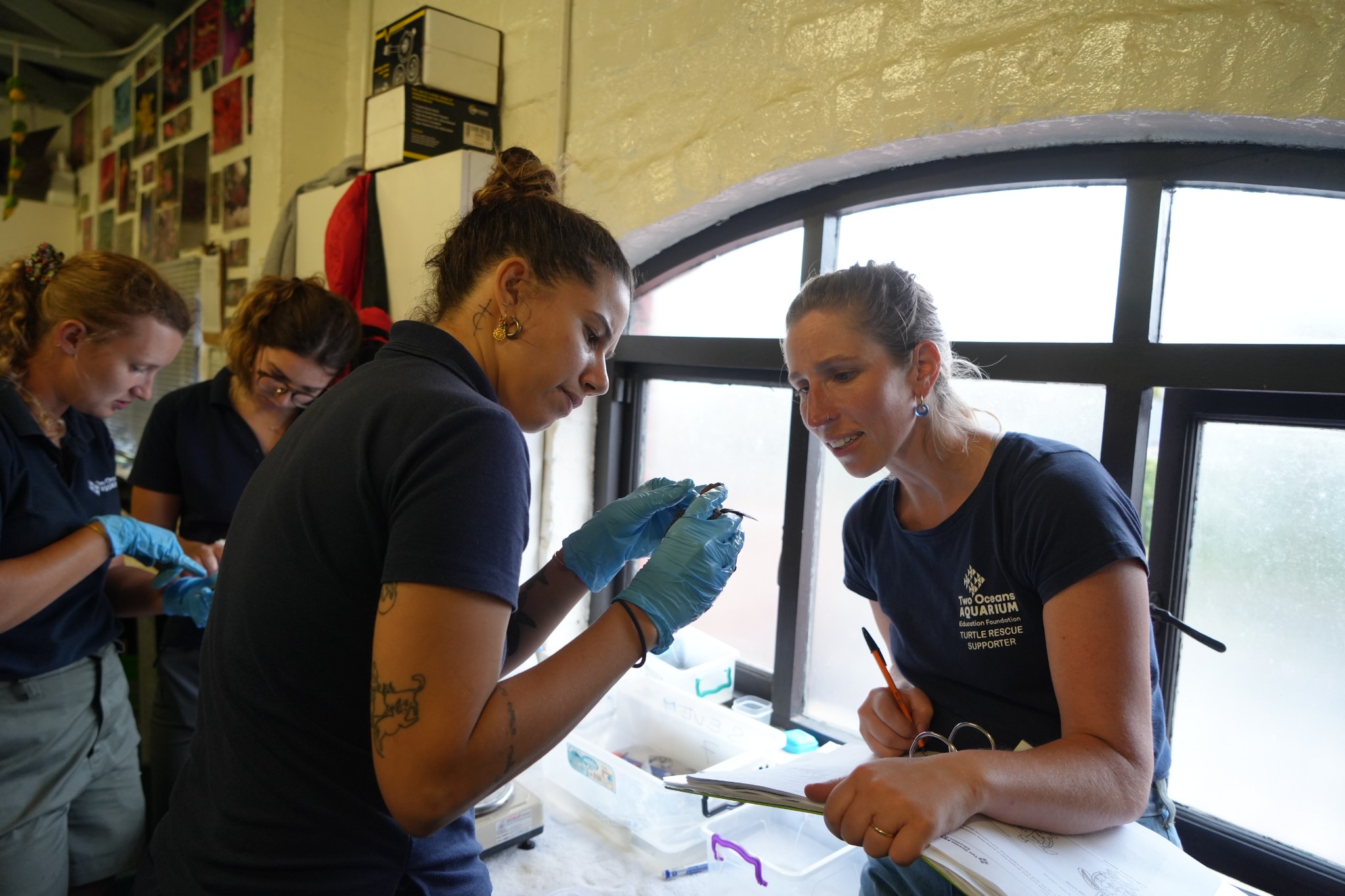
But this achievement extends far beyond our turtle team. From the rescuers who braved stormy beaches and the volunteers who worked tirelessly behind the scenes to the conservation organisations who opened their doors to hundreds of hatchlings, “turtle-geddon” demonstrated what is possible when a community comes together for marine turtle conservation.
In the wild, only an estimated one in every thousand turtles survives to adulthood. Through the collective efforts of our turtle community, hundreds of hatchlings have been given a second chance at life in the ocean.
“Turtle-geddon” may have been unprecedented, but turtle stranding season happens every year. Our experience in 2024 is a powerful reminder that every individual, organisation, and community has a role to play in protecting marine turtles. By working together, we can make a meaningful difference to the future of these incredible animals.
As we celebrate 25 years of the IOSEA Marine Turtle MOU, we showcase some of the people, initiatives and communities that have contributed to marine turtle conservation across the region. Visit our Story Map to discover their stories.