
One Dark, Dark Snowflake Night
The beach
It was dark. I know, on the beach it’s always one type of dark or another, but this particular night stood out as being one of those dark depths from which I strained to extract detail. A breathless breeze from the north took the life out of each breath, dry from its travels across the desert. There was no rustling of leaves in the trees, because vegetation was just a few scraggly halophytes defying the harsh frontier between the Red Sea and the arid Arabian desert.
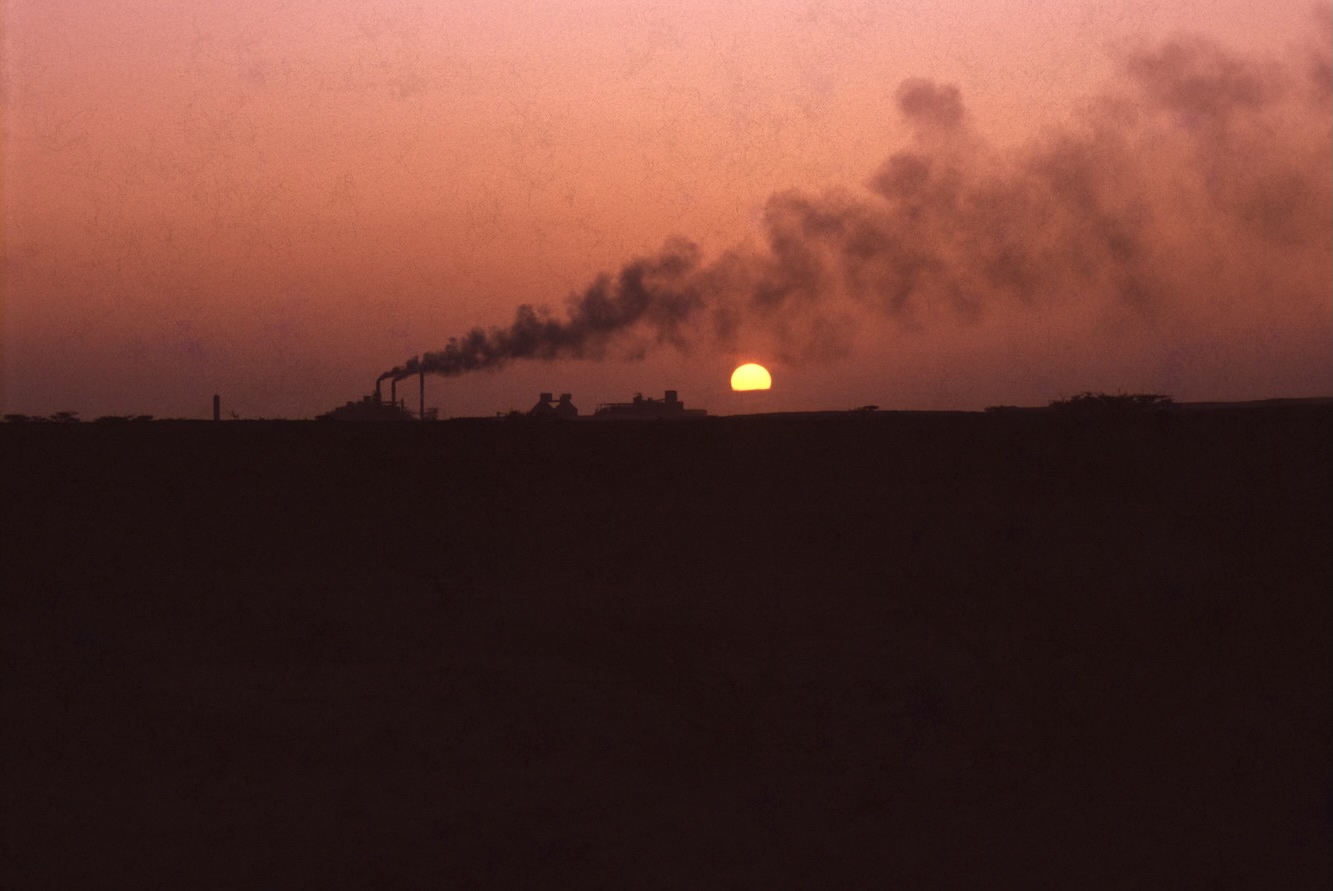
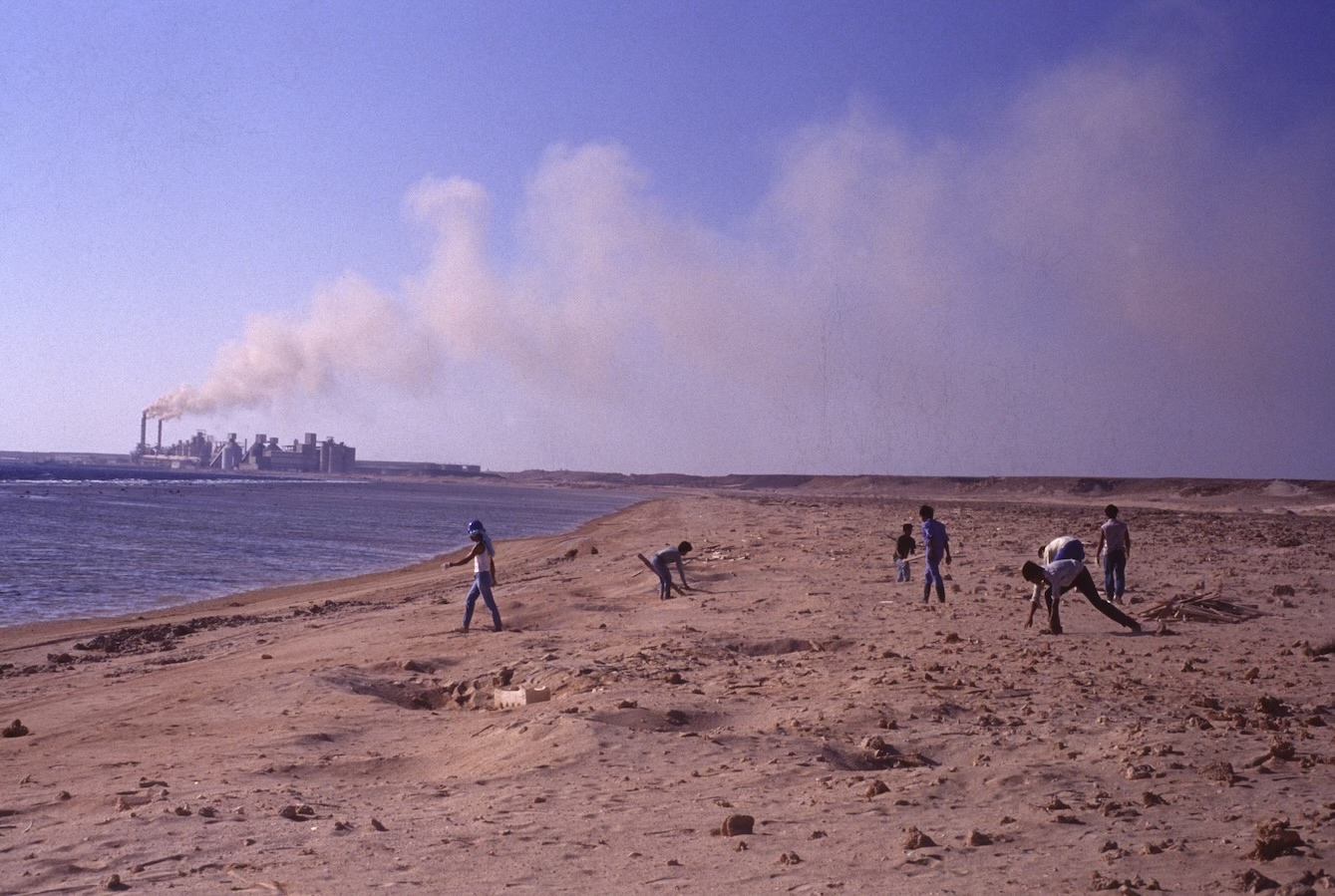
From a nearby cement plant, unchecked by filters, billowed clouds of half-baked cement lye, and like snowflakes in the desert sky, they drifted down, bathing all in its path with a coating of near-cooked cement. As a nightly visitor to the beach, the dust was irritating and meddlesome. My eyes burned with the alkali residue, often blinding me. I walked the beaches wearing swim goggles, and ended each night coated with a thick film of grey with racoon eyes.
Hundreds of tonnes per day drifted from the sky, and the beach was directly in its path. Like snowdrifts piling up in spurs, cement dust buried the beach, furthering its wasteland appearance, entombing what little nesting area remained.
Meeting KSA4811
It was on this beach that I first encountered KSA4811. Not that she had originally been born with a tag, but a few years earlier this green had been tagged by Dr Jeff Miller, one of the three people to kickstart my turtle journey (alongside Perran Ross and Col Limpus).
There I was, 20 years-old, young and barely able to write the word turtle, let along know much about their biology, enveloped by cement snowflakes, coated with grime, awaiting the drop of the first egg so I could crawl up and continue my work.
Up to then, in many ways, it had been just that. Just work. But that night KSA4811 set me on a long journey across many seas, over multiple nesting beaches, and with some amazing people, and turned it into more than work. More like a lifelong passion. Because of her, to this day I focus my energies toward seeing mankind coexist with turtles.
A turtle missing a flipper
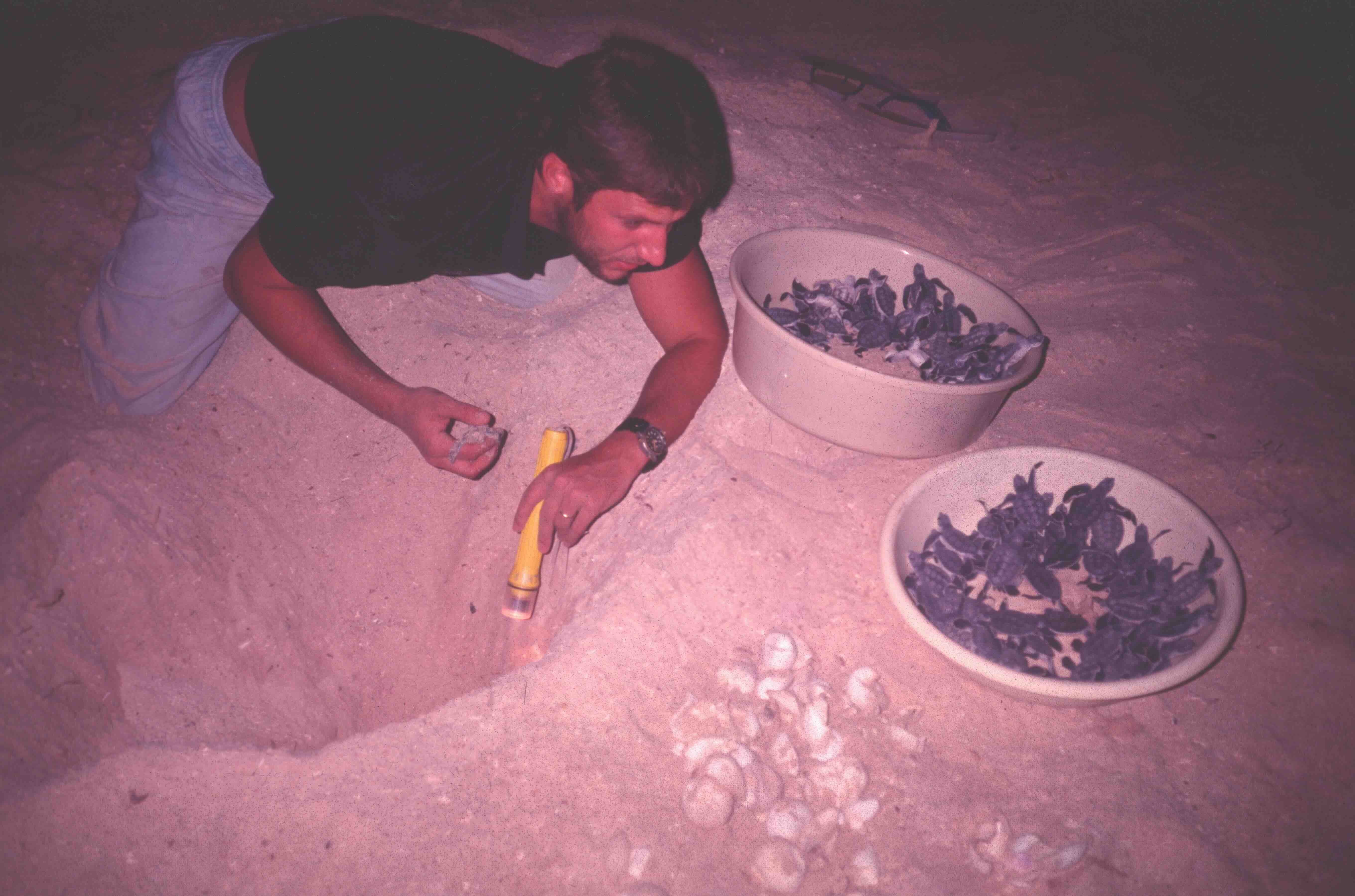
KSA4811 was a green turtle, a survivor of some encounter in years past, and on that dark night, bathed in burning cement, she had patiently dug a body pit, but moved on when attempting to excavate a nest chamber. She had done this several times before I was aware of a deviation in the regular sound pattern, as I lay nearby in an old body pit.
So I crawled up behind her to investigate, leading to my very own National Geographic-like experience to which few are privileged. At some point she had lost a rear flipper to a predator or to entanglement, leaving behind nothing but a stump at what would be the elbow, yet she continued in her efforts to excavate a suitable nest for her eggs, the stump just going through the motions but with no flipper to actually get anything done.
I watched this for a little while until, unthinking, I did what every blissfully-ignorant budding turtleologist would do: I reached in with my hand and carefully dug down in time to that rhythmic pattern that is so genetically preprogrammed and familiar to them.
As she dug down with the one flipper, I swished sand out of the way. As she moved to scoop sand with her stump, I reached in and excavated for her. Then she was back to the flipper and I was once again swishing sand out of the way. Over and over, we repeated that pattern until we got that nest dug, and she laid eggs.
I just laid behind her mesmerized. Several times that year she emerged to nest; and each time I helped dig that egg chamber. I was even there for her when she came back a few years later. I felt like I had helped complete a cycle that could have been permanently broken.
Learning without a manual
Recall this was in the 1980s, as the internet was being invented. Before smartphones and before Google. One could not swipe up, tap a screen here and there, and find out what to do.
I was on a remote beach in Saudi Arabia. Alone. I had not studied turtle biology. I had not had the luck of volunteering on a turtle beach. So reaching in with my hand was nothing but instinctive.
My job said I had to go and tag them, measure them (I even managed to get some of that wrong!!!), count the eggs and mark the nests. I knew why I was doing it, but it hadn’t hit me that the turtles were, well, turtles! They weren’t some inanimate work object. They were alive. Sentient.
That night was special for me. I learnt more in a few hours with her about conservation needs, about human-turtle interactions and about compassion than I had in my reckless youth.
A lifelong lesson
The fragile link in sea turtles’ lives that exists between turtles and mankind is at times perilous, at times magical. Threatened by over-harvesting, incidental capture in fisheries, habitat loss and pollution of the seas, turtles often face an uphill struggle for survival. But that need not be the case.
Turtles and humans have co-existed for centuries. It just takes the right actions, at the right time and by the right people to make it work.
KSA4811 will, for me, forever embody that interconnectivity between man and environment. I think there is a turning point in everyone’s lives, and I turned mine, years ago, on the shores of Arabia one dark, dark snowflake night.
By Nicolas J. Pilcher
As we celebrate 25 years of the IOSEA Marine Turtle MOU, we showcase some of the people, initiatives and communities that have contributed to marine turtle conservation across the region. Visit our Story Map to discover their stories.