
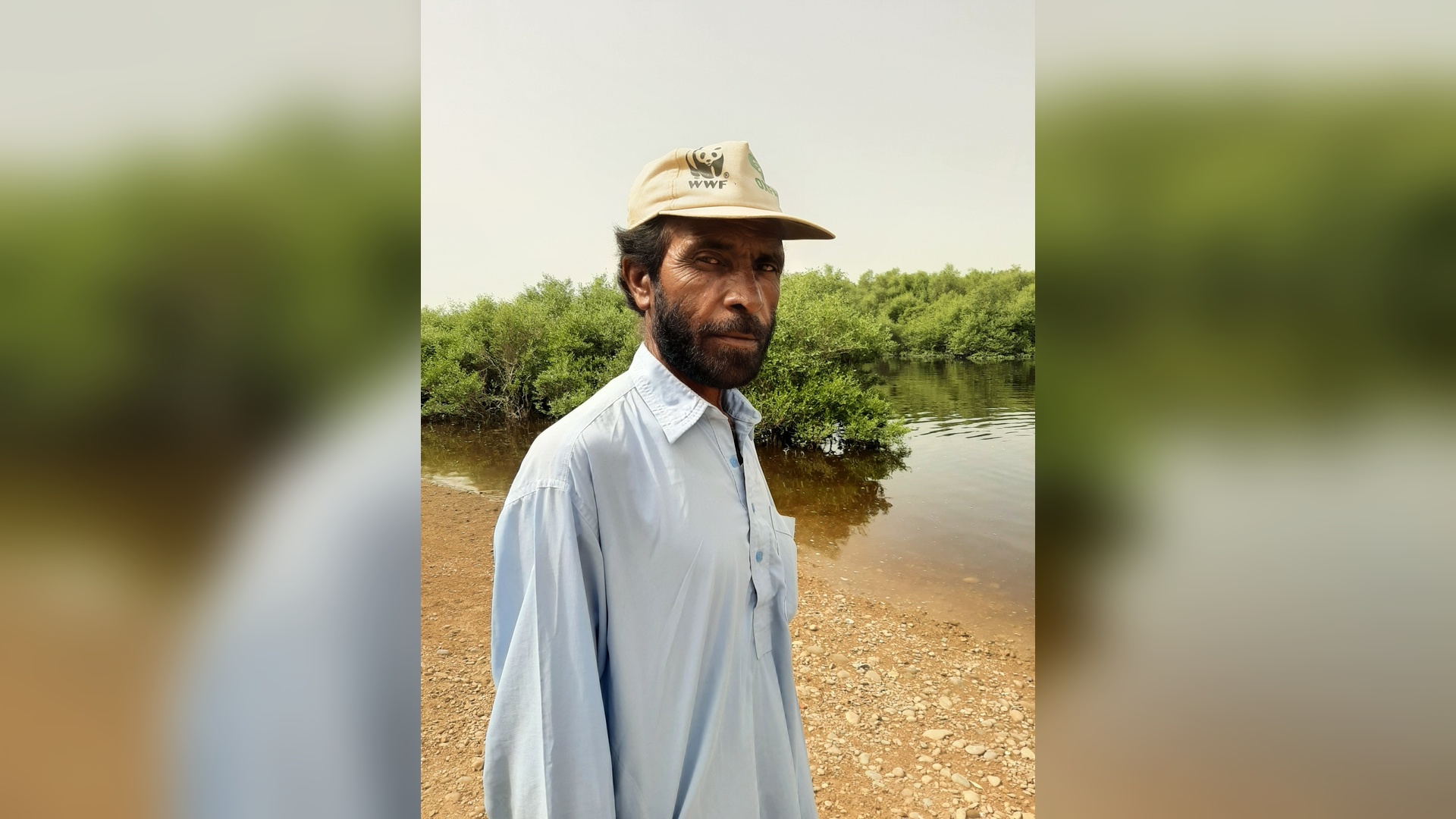
The Story of Abdullah: Three Decades of Marine Turtle Conservation
Abdullah Mirbahir grew up in the fishing community of Kakapir, a coastal village near Hawks Bay in Karachi, Pakistan. His journey into marine turtle conservation began when he was just 12 years old, volunteering alongside a relative who worked for the Sindh Wildlife Department. He accompanied him to observe nesting females, monitor nesting beaches and support the safe release of hatchlings into the sea. Witnessing threats from predators, human disturbance and fishing-related activities left a lasting impression on him.
Recounting those early days, Abdullah says, “I would keep a lookout for adult Green turtles and collect their eggs, moving them to a hatchery.” Actively engaged in the voluntary monitoring and conservation of green turtle nesting sites in the Hawks Bay area since the 1970s, Abdullah has many stories to share.
Rescuing Disoriented Turtles
“Sometimes, the adult female turtles veer away from their intended nesting grounds. When this happens, I rally community members, and together we locate and rescue the disoriented turtles.”
“I rescue the disoriented turtles by wrapping them in Ajrak (a traditional block-printed shawl) to ensure their safety and release them back into the water. This must be done cautiously to avoid harm or disturbance.”
On some occasions, fishing boats were used to carry turtles into deeper waters for release. Abdullah estimates that over the course of a decade he rescued and released approximately five to seven adult green turtles, examining them for visible injuries and signs of contact with nets or marine debris before release.
Individuals like Abdullah, who actively participate in fishing and community welfare, and dedicate a substantial amount of their time personally monitoring and protecting sea turtles, can offer a solution to conservation organizations in effectively safeguarding vulnerable species by forming a robust and consistent beach monitoring mechanism.
Threats on the Beach
“I have witnessed events where dogs actively excavate the nests to prey on the submerged hatchlings. But these turtles face many other threats too. Development on the beachfront and the waste left behind by beach goers, including disposable plastics, and discarded fishing lines and nets are all obstacles for these turtles and their hatchlings,” says Abdullah as he sheds light on the many threats and dangers to sea turtles.
“I once witnessed five dogs barking at a nest located across the WWF Wetland Centre. I dug the nest and found around 70 to 80 hatchlings entangled in a ghost net, which was obstructing their exit from the nest and preventing them from reaching the ocean.”
“I released them into the sea during low tide at night,” he recalls proudly.
He has also persuaded people attempting to collect hatchlings illegally near a nesting beach to release them, explaining the threats facing marine turtles and why they need protection.
Working with WWF-Pakistan
Abdullah’s involvement with WWF-Pakistan’s marine turtle conservation activities began in 2012, building on his earlier experience with the Sindh Wildlife Department and his longstanding knowledge of nesting turtles along Hawks Bay and Kakapir.
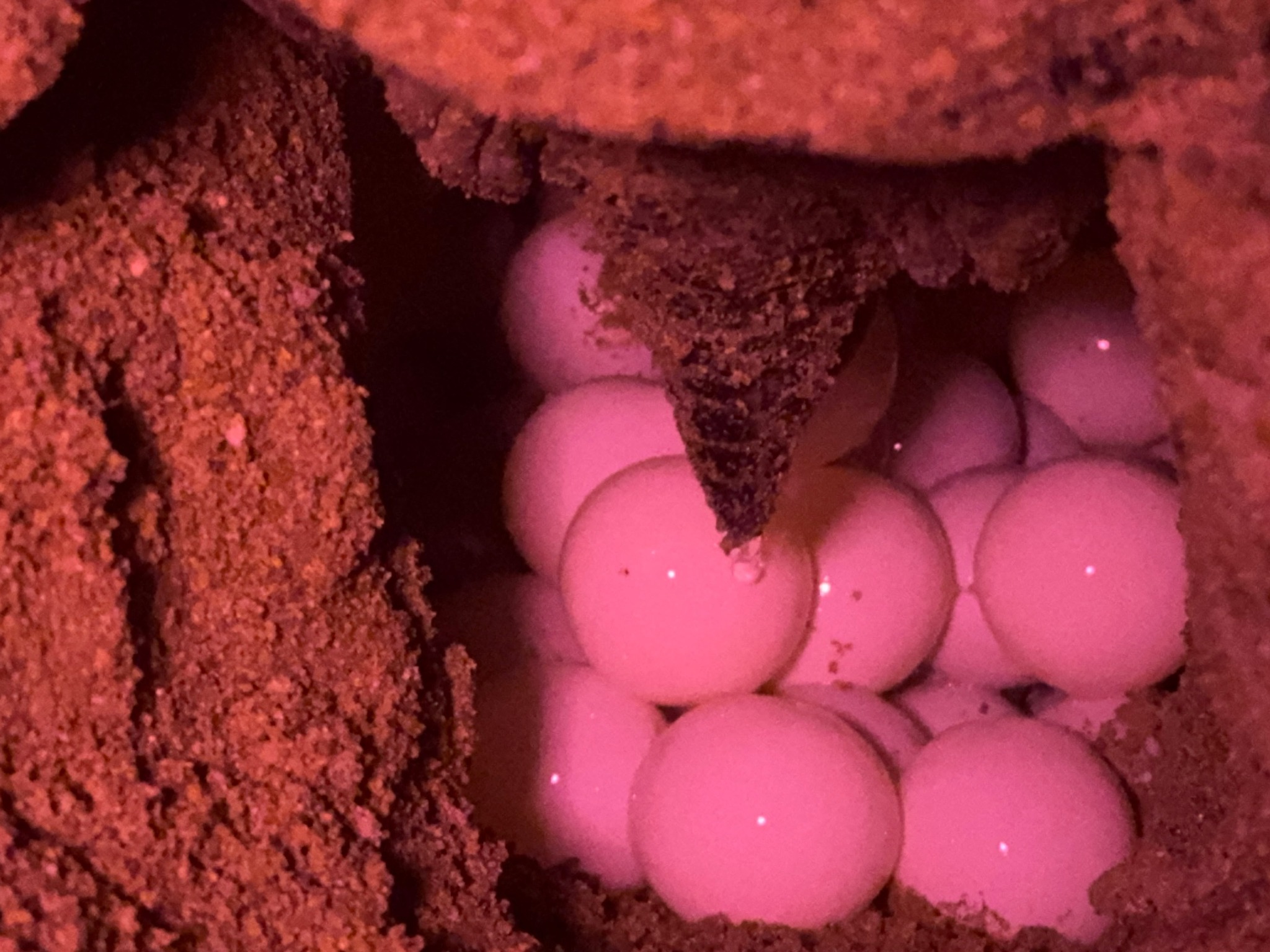
In 2015, Abdullah became involved in a small-scale research initiative to monitor temperatures inside marine turtle nests. He helped place temperature data loggers inside nests to record incubation conditions, supporting monitoring across approximately 5 to 18 nests.
Through this project and subsequent conservation activities, he received practical training in data collection and reporting, monitoring nesting activity, observing female turtles during egg laying, safely handling and releasing turtles and hatchlings, and turtle tagging.
He went on to support WWF-Pakistan’s Turtle Watch activities, including monitoring adult green turtles on nesting beaches, assisting with hatchling releases, identifying threats to nesting habitats, and taking part in conservation awareness sessions. Within Kakapir he became widely recognized as the person to contact when turtles were found stranded, injured, disoriented or otherwise in need of help.
Communities as Custodians
The traditional knowledge and cultural practices of Abdullah and his community offer an opportunity to strengthen marine turtle conservation efforts. Recognizing the significance of these turtles in the communities’ historical narratives, rituals, and beliefs; Abdullah, and many others like him, have a deep reverence for the species and demonstrate responsibility towards their protection. They have an intimate understanding of nesting behaviour in turtles, which can be tapped to monitor and safeguard these habitats and deter poaching. These communities can effectively act as custodians.
Residing close to the nesting grounds of marine turtles and actively involved in fishing activities, these coastal communities are a key stakeholder and indispensable partners when it comes to marine conservation. By shifting to sustainable fishing practices, including responsible fishing techniques and by participating in the safe handling and release of accidental catches, these communities can make significant contributions to reducing the mortality of marine turtles, whilst ensuring the sustainability of fish stocks and the overall health of the marine ecosystem.
Abdullah’s Legacy
Abdullah has shared his experience with local fishing communities, young people, students and visitors. He has passed on practical conservation knowledge to his son and a group of young fishers from Kakapir, encouraging them to recognize nesting activity, reduce disturbance and help turtles and hatchlings when needed. They help as and when they can, around their fishing and seasonal livelihood responsibilities, a reminder that conservation must fit into the everyday realities of coastal communities. His work has also reached beyond turtles: he supported a women-led community nursery for mangrove conservation.
Abdullah’s decades of dedication illustrate why effective marine turtle conservation depends not only on research and institutional programmes, but also on the experience, commitment and participation of coastal communities. His story is a reminder that conservation is not only about protecting endangered species, but also about the people who dedicate their lives to safeguarding them, and the knowledge and commitment they pass on to others.
By Summaiya Abid and Shoaib Abdul Razzaque, WWF-Pakistan
As we celebrate 25 years of the IOSEA Marine Turtle MOU, we showcase some of the people, initiatives and communities that have contributed to marine turtle conservation across the region. Visit our Story Map to discover their stories.