
The Odyssey of Mother Turtles
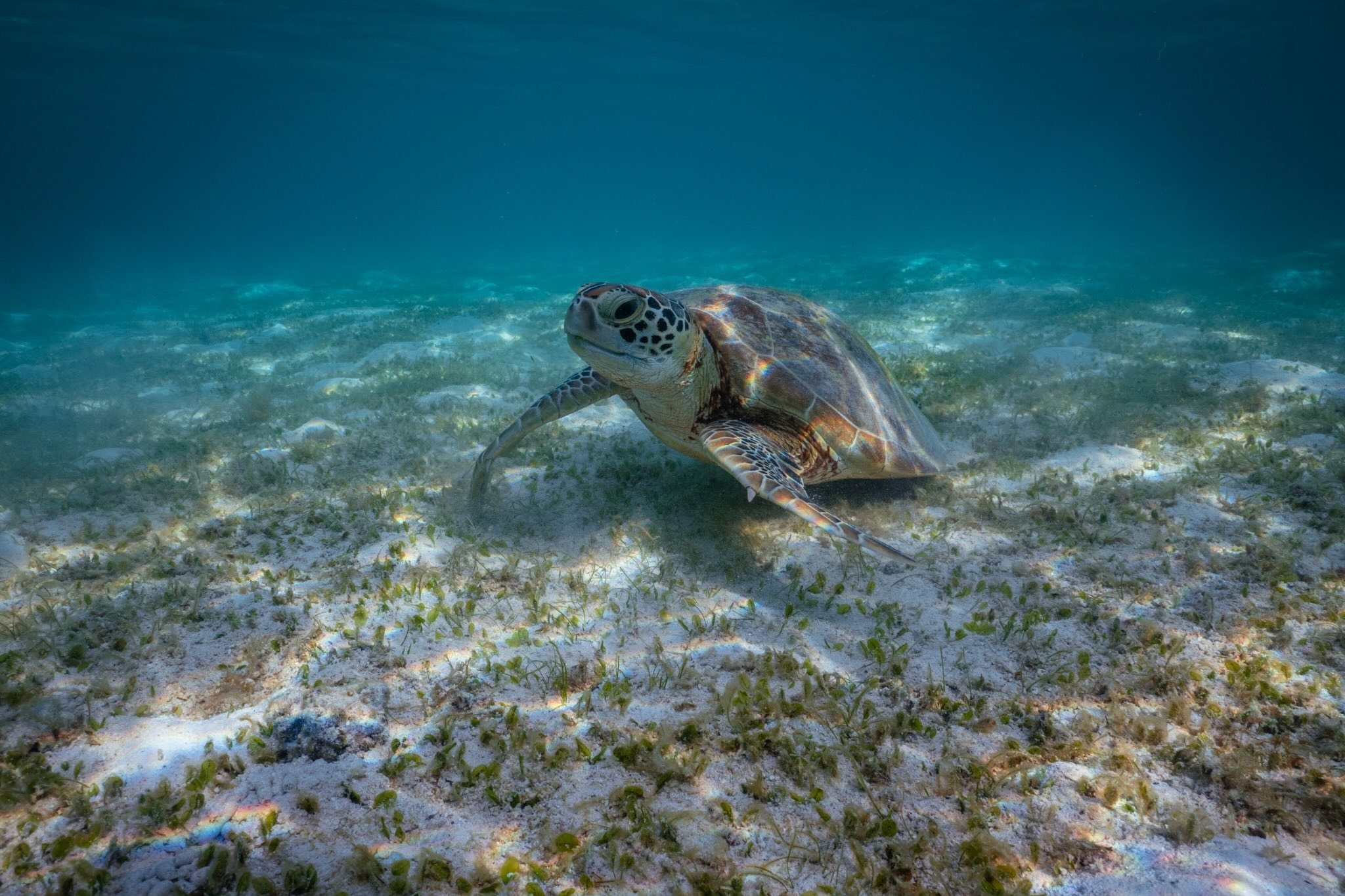
Under a moonlit sky close to midnight on August 13, 2022, the soft whispers of waves greeted a nesting marine turtle. She is a green turtle, one listed as “endangered” by the IUCN Red List of Endangered Species. Pok Jamil, one of our dedicated local turtle guardians, watched as she emerged from the sea, dragging her heavy shell onto the sands of Telaga Papan Beach in Setiu, Terengganu.
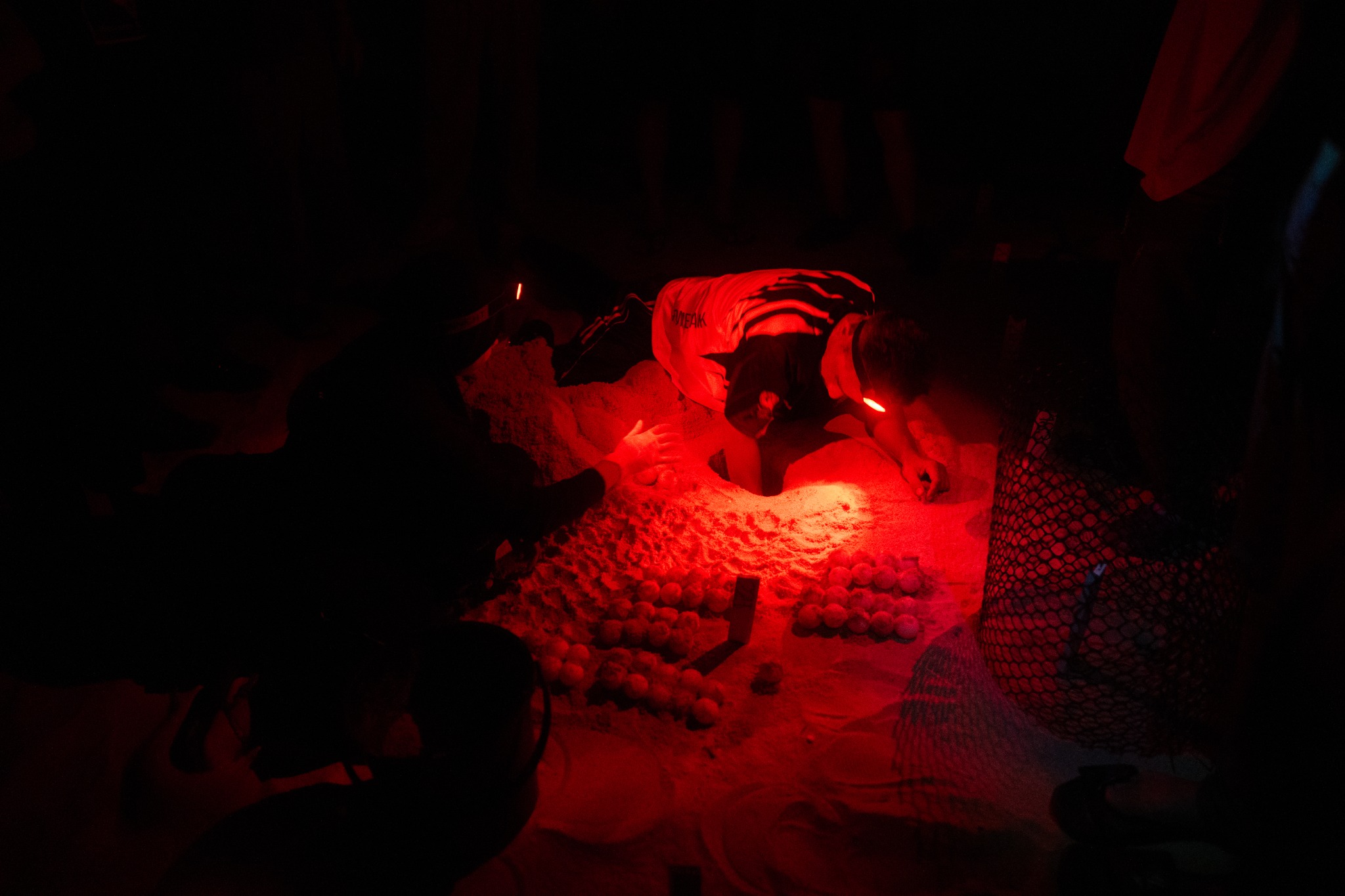
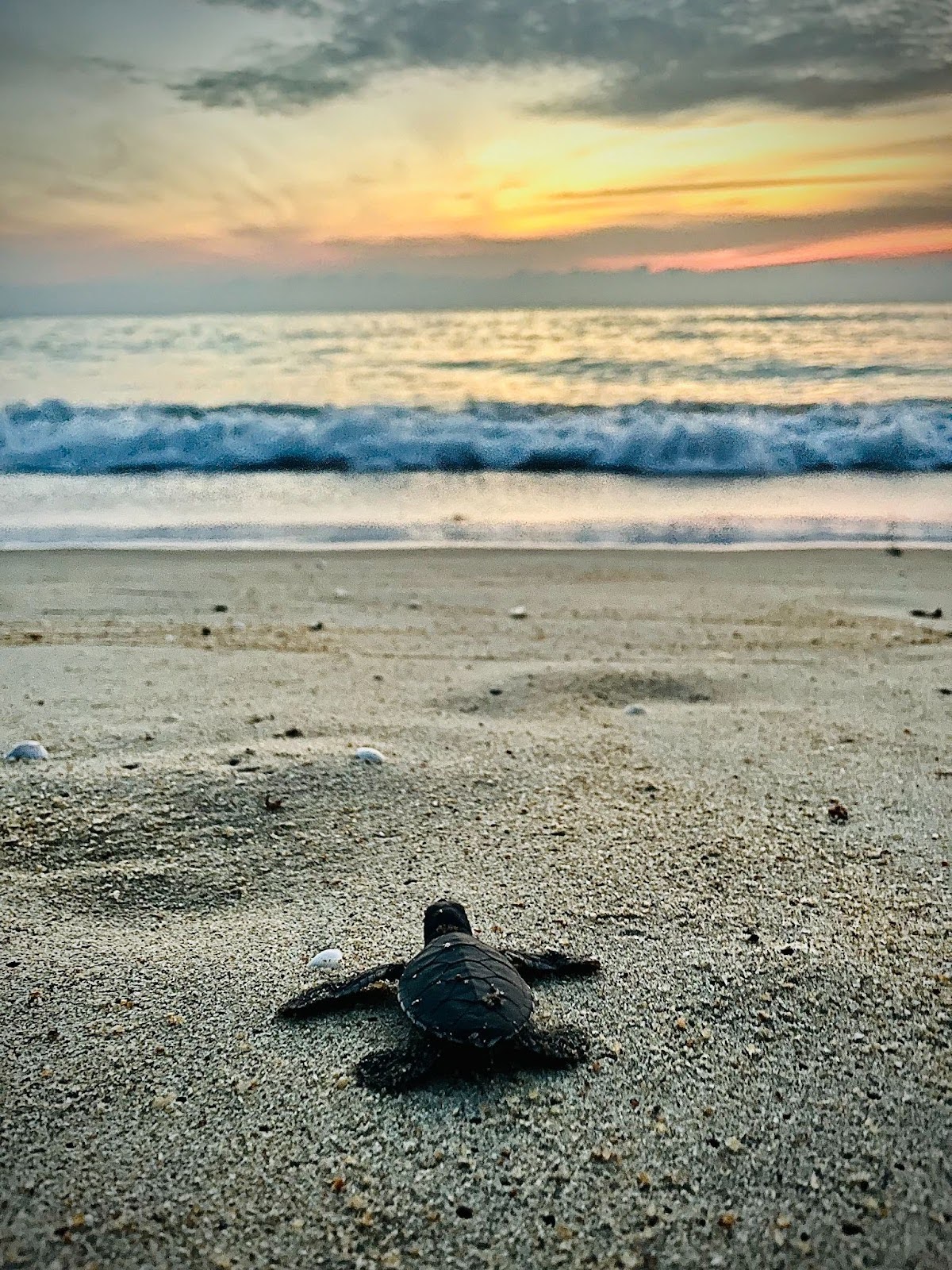
Her turtle tag reads “MY(TGG)1030”: MY for Malaysia, TGG for Terengganu, and 1030 her unique identification code. But for this story, we’ll call her Melur. She was born on this very beach and has now returned to give birth to the next generation. With great care, she dug a nest and laid 70 precious eggs — each one a fragile promise of new life. Thanks to the stringent monitoring efforts of our turtle guardians, every single egg was protected and brought back to the hatchery, giving them the best chance to hatch safely. In time, 66 tiny hatchlings of Melur broke free from their shells, embarking on their perilous journey to the ocean, a remarkable 94% hatch success rate.
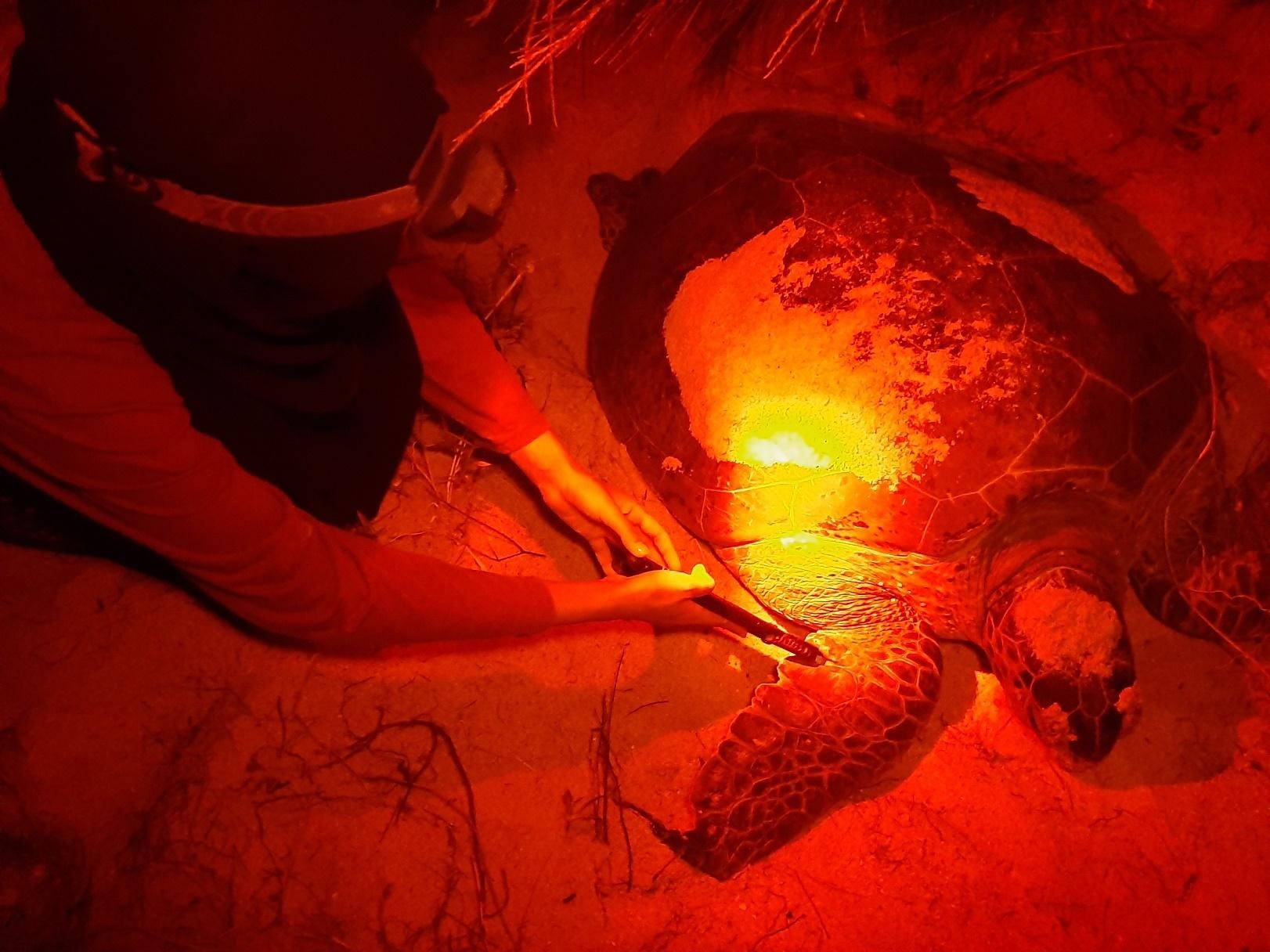
Unbeknown to Pok Jamil, Melur had been here before. Almost exactly four years earlier, on August 2, 2018, she had nested on this very same beach, laying 68 eggs. Of those, 61 hatchlings had made it to the sea. Safe to say Melur is a resilient and devoted mother turtle, but her return is not always guaranteed.
The Perilous Path of a Mother Turtle
Melur's nesting activities are testaments to the resilience of marine turtles, but also a reminder of the immense threats they face. Turtle poaching, egg harvesting, and habitat conversion continue to endanger these ancient mariners. Poachers seek turtle eggs for sale and consumption, disrupting an already fragile life cycle. Without protection, countless eggs would be lost, diminishing the number of turtles that might one day return to nest.
This is why nesting monitoring is crucial. By safeguarding nests, we prevent poaching and give hatchlings the highest chance of survival. Climate change also poses a growing threat: rising sand temperatures can skew the sex ratio of hatchlings, leading to fewer males. To counter this, we monitor our hatchery’s temperature to facilitate a balanced development for future marine turtle populations.
The Importance of Turtle Tagging
Marine turtles like Melur are highly migratory, often traveling thousands of kilometers across oceans. By tagging nesting mothers, we gain critical insight into their life. These records help conservationists track their return journeys and, in the unfortunate event of poaching or accidental capture in foreign waters, it helps identify affected populations.
Melur’s return to Telaga Papan is not just a personal journey; it is a beacon of hope. Yet can she and her future generations continue to find sanctuary on their nesting beach?

The Future of Our Nesting Turtles
Coastal erosion, spurred by climate change and human activity, threatens nesting beaches like Telaga Papan. Development along coastlines, pollution, and unsustainable tourism further disrupt nesting activities. Plastic pollution poses an additional silent killer, entangling newborn turtles or disrupting turtle nesting.
WWF-Malaysia, alongside the Department of Fisheries Terengganu, and our dedicated turtle guardians like Pok Jamil, are working tirelessly to combat these threats. Through nesting monitoring, coastal rehabilitation efforts such as planting native vegetation for shading, beach profiling to monitor erosion, and advocating for stronger habitat protections, we strive to ensure that nesting beaches remain safe havens for generations of turtles to come.
A Mother Turtle’s Legacy
A mother turtle lays countless eggs in her lifetime, yet only one in a thousand hatchlings will survive to adulthood and return to nest. Each egg, each hatchling, and each nesting mother is precious. Melur is proof that those odds can be beaten: born on the sands of Telaga Papan, she came home to nest again, not one but twice, between 2018 and 2022.
But mother turtles like Melur cannot do it alone. Keeping her beach safe takes guardians, but also all of us: never consuming turtle meat or eggs, keeping beaches clean and avoiding nesting beaches at night.
Perhaps in 2026 or 2027, she will return once more. When she does, Pok Jamil and his fellow guardians will be waiting to welcome her and to protect the next generation. With the unwavering efforts of turtle guardians and your support, we can continue to welcome and protect these remarkable mothers.
“Let’s safeguard our mother turtles. Together, we can nurture a future where marine turtles continue to thrive alongside humankind, just as generations of mothers have before us.”
By Justice Khor, Marine Programme, WWF-Malaysia
As we celebrate 25 years of the IOSEA Marine Turtle MOU, we showcase some of the people, initiatives and communities that have contributed to marine turtle conservation across the region. Visit our Story Map to discover their stories.