
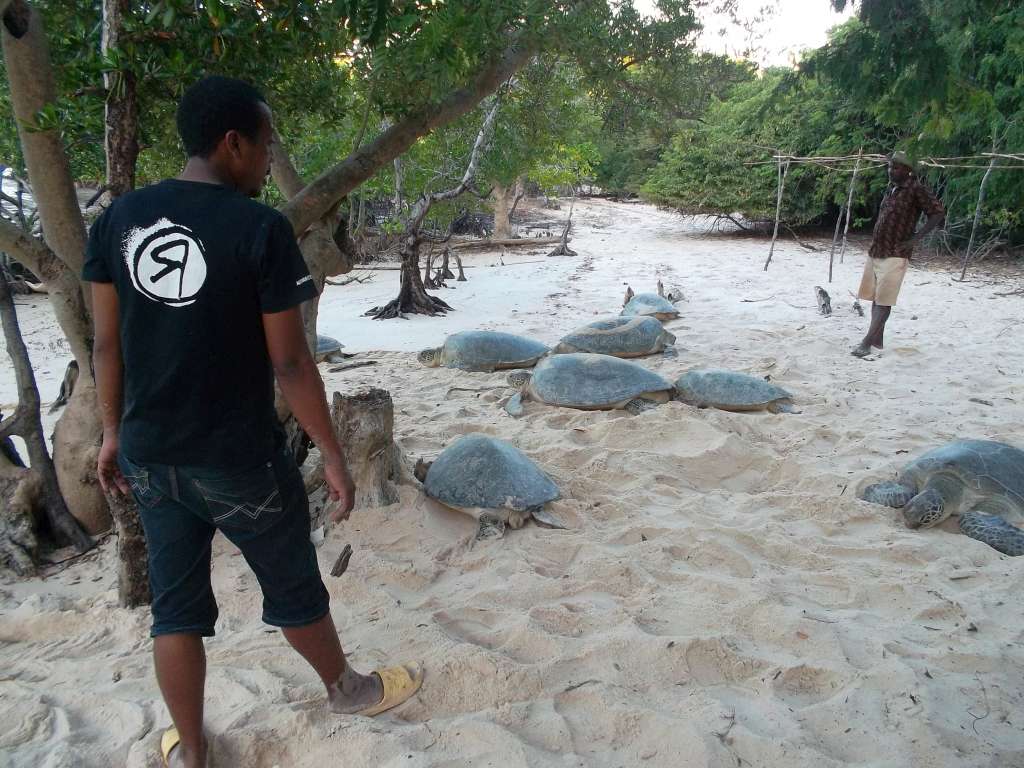
A Race for Life: When Communities Become Guardians of Sea Turtles
Stretching along the northwestern coast of Madagascar, the waters of the Sahamalaza Biosphere Reserve are home to habitats essential to the survival of sea turtles: rich feeding grounds and nesting beaches vital to their reproduction.
Yet, despite conservation efforts already underway, these iconic species remain under serious threat. Trafficking networks continue to operate in the region, while the gradual degradation of their habitats further jeopardizes their future.
Faced with these threats, coastal communities have chosen to act. Alongside authorities and partner organizations, their mobilization now represents one of the last lines of defense for these vulnerable animals. In Sahamalaza, communities understood that protecting sea turtles had to become a shared responsibility.
The stories we share today bear witness to this commitment. They have been made possible by the efforts undertaken to mobilize funding for the conservation of marine megafauna in northwestern Madagascar.
Communities Taking Action
Although the Dugong & Seagrass Conservation Project was primarily dedicated to the conservation of dugongs and seagrass ecosystems, local communities wanted to go further. Aware of the many pressures also facing sea turtles, they chose to include their protection in their own conservation efforts.
This led to the development, recognition, and implementation of local customary rules, known as “Dina”, in around ten coastal villages within the Sahamalaza Biosphere Reserve.
In total, nearly 1,200 beneficiaries were involved in marine megafauna conservation efforts. At the same time, improving livelihoods represents an essential lever. It enabled these communities to strengthen their commitment and become key stakeholders in the preservation and survival of this natural heritage.
This choice marks a profound shift: conservation is no longer solely a responsibility carried by authorities or partner organizations. It has become a value that communities themselves defend, embrace, and pass on.
Berafia: A Community Takes a Stand
This deeply rooted value comes to life in a story from the waters off Berafia.
One day, while making an ordinary journey at sea, the village chief of Berafia and his companions spotted fishers handling nets in which several sea turtles were struggling.
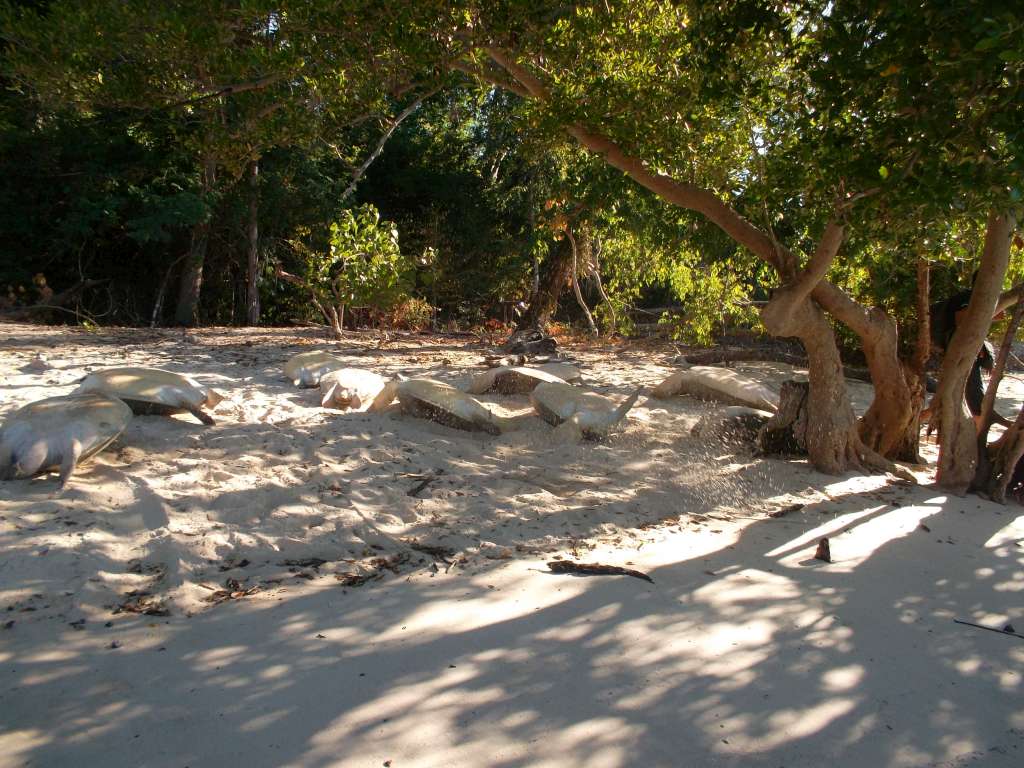
For them, there was no possibility of looking away.
They immediately understood that this was not an ordinary fishing activity. The turtles had been deliberately captured by poachers. The offenders had come from Mahajanga and had travelled nearly 400 kilometres in the hope of leaving with their catch.
But the members of the community knew that these turtles were part of a heritage far older than themselves—a living heritage whose future now depended on their courage and their willingness to act.
The offenders were then brought to the village, and the sanctions provided for under the “Dina” were enforced: their nets and boats were confiscated, and fines were imposed.
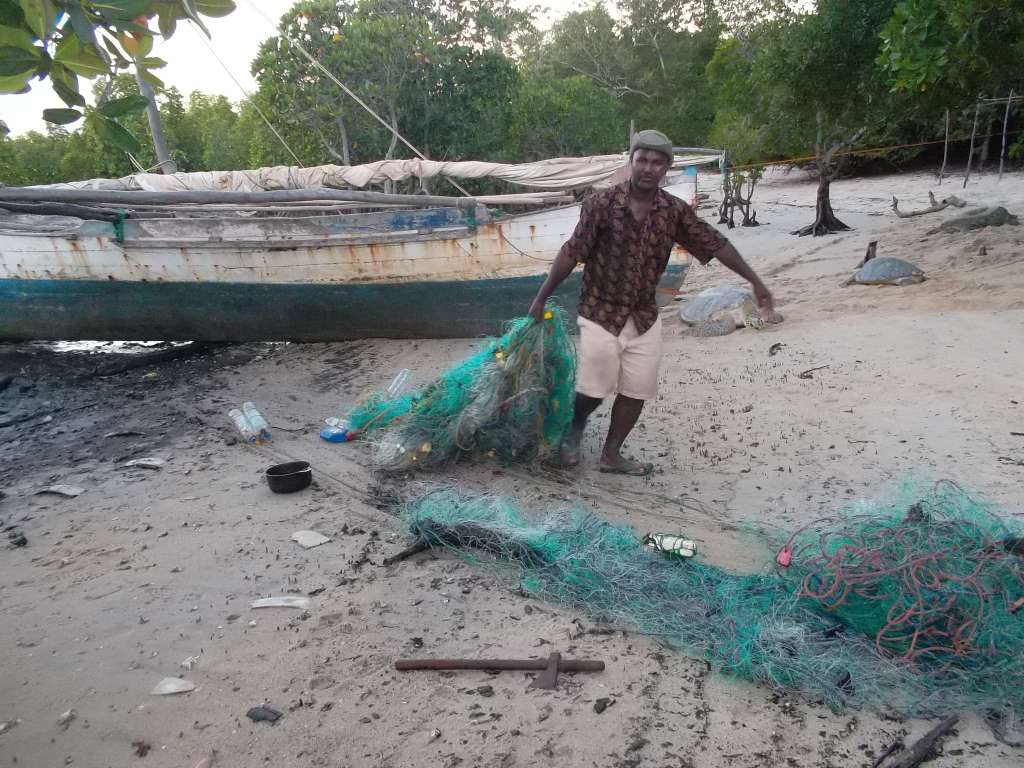
But the most powerful act was still to come.
The captured turtles were released back into the sea. Slowly, they found their way back towards the open waters.
As their silhouettes disappeared beneath the waves, a sense of pride swept through the village. Through this act, the community affirmed that these animals were not merely a resource to be exploited, but a living heritage worth protecting.
The community also demonstrated that the “Dina” was no longer just a text or a set of rules. It had become the voice of an entire community, determined to defend its territory, its resources, and the living world that depends on them.
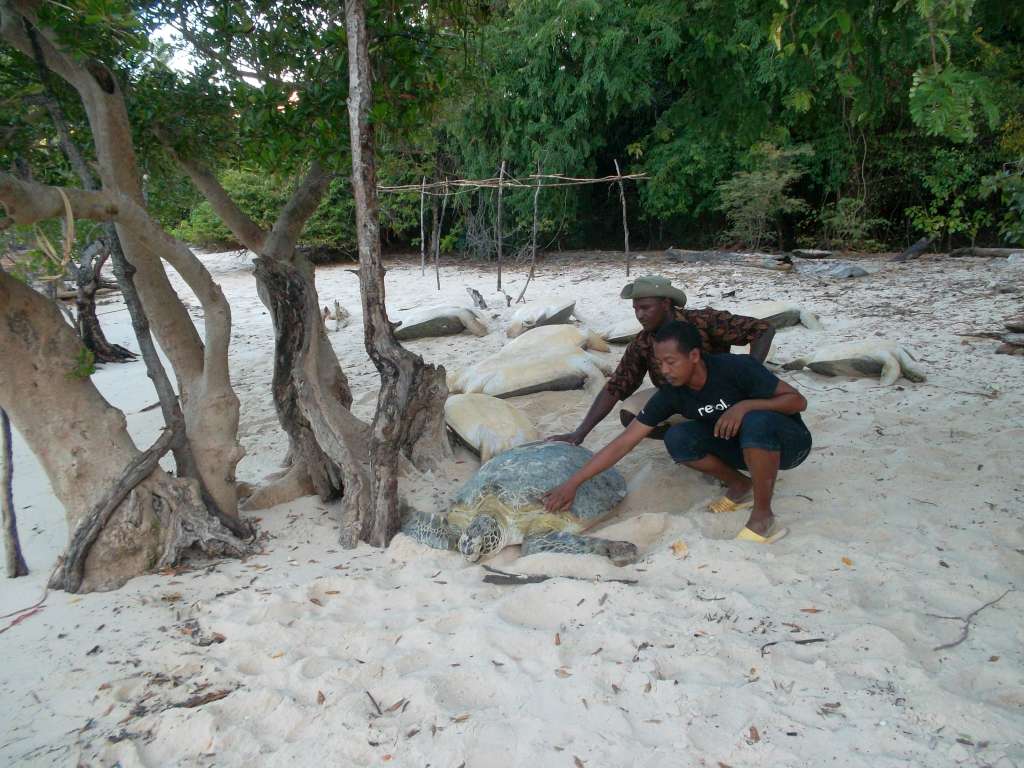
Andrafialatsaka: Protecting Turtles on the Beach
In Andrafialatsaka, another story tells of this same awakening.
As night falls over the shore, green turtles silently leave the ocean. Guided by an ancient instinct, they slowly make their way across the sand to lay their eggs. This ritual, repeated for thousands of years, ensures the survival of their species.
Yet, at this precise moment, when they are slow and vulnerable, they become easy prey.
Where some see an opportunity to capture them, committed communities see a life worth defending.
They watch over the beaches. They intervene when turtles are threatened. They protect them until they are able to return to the ocean.
One by one, they are saved.
One by one, they return to the sea.
Every turtle saved represents far more than a life preserved. It becomes a victory—not only for sea turtles, but also for the women and men who mobilize every day to protect their natural heritage.
From Conservation to Culture
From Berafia to Andrafialatsaka, these stories ultimately tell the same story of transformation: communities choosing to protect what they depend upon.
Fishers, women, young people, local authorities, and conservation actors thus become links in the same chain.
It is a collective awakening, driven by the determination to firmly embed the protection of a living heritage—one that bears witness to millions of years of evolution—within local culture.
This is the true strength of inclusive conservation.
It is this momentum that the Aro Fano Project, funded by the GEF/UN Environment and implemented by the Ministry of Environment and Sustainable Development, now seeks to strengthen across northern and northwestern Madagascar.
The project aims to promote the inclusive conservation of sea turtles and their habitats, while strengthening the participation of the communities living alongside them and helping to safeguard the marine resources on which many families depend.
Because when acts of protection become the actions of an entire community, conservation ceases to be merely a project.
It becomes a culture.
A source of pride.
A legacy.
And then, sea turtles will continue to travel through the waters of northwestern Madagascar, return to their ancestral nesting beaches, and carry forward, for generations to come, the living testimony of millions of years of evolution.
As we celebrate 25 years of the IOSEA Marine Turtle MOU, we showcase some of the people, initiatives and communities that have contributed to marine turtle conservation across the region. Visit our Story Map to discover their stories.