From the Sabah Declaration to the Next 25 Years of the IOSEA Marine Turtle MOU
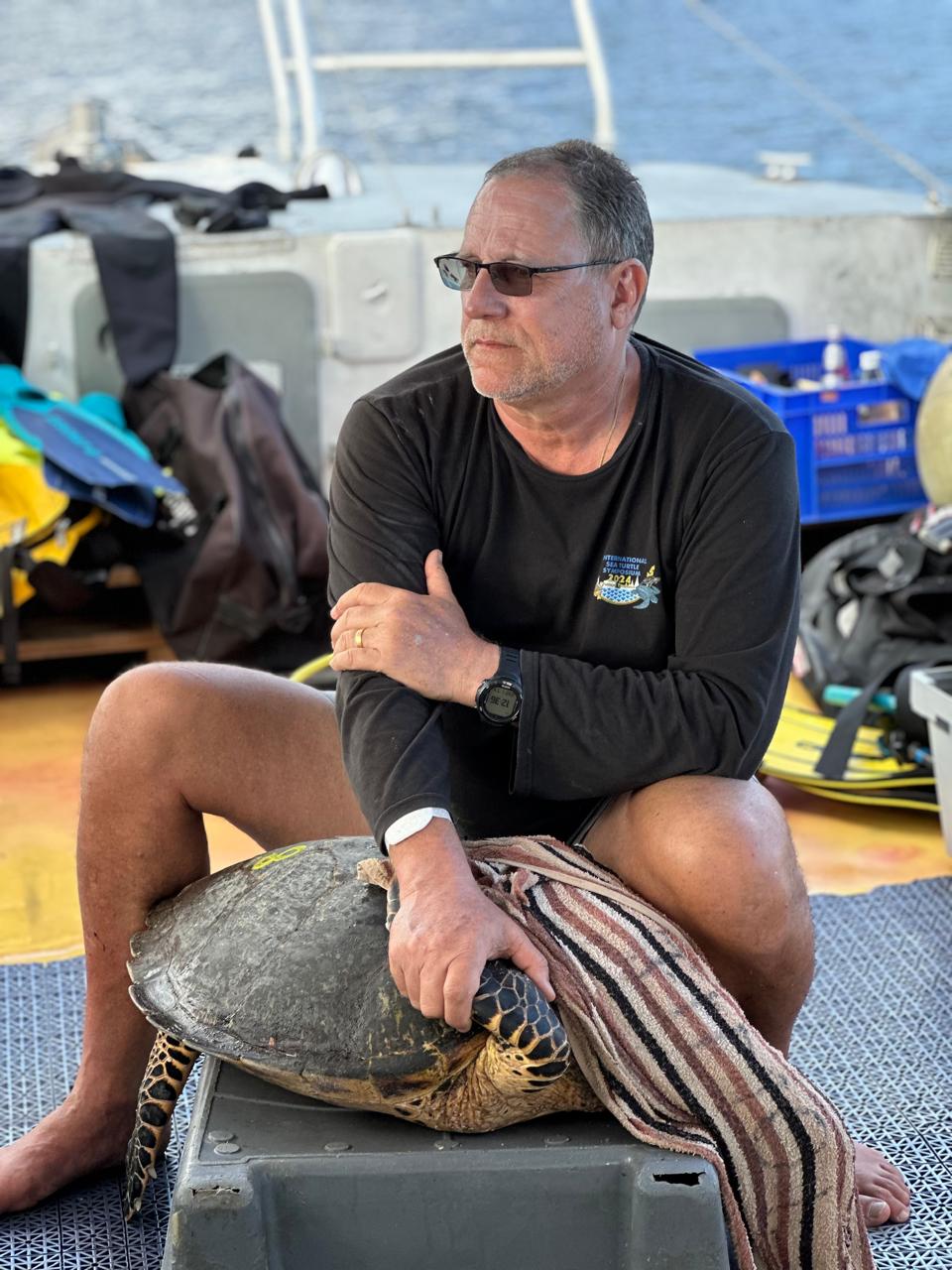
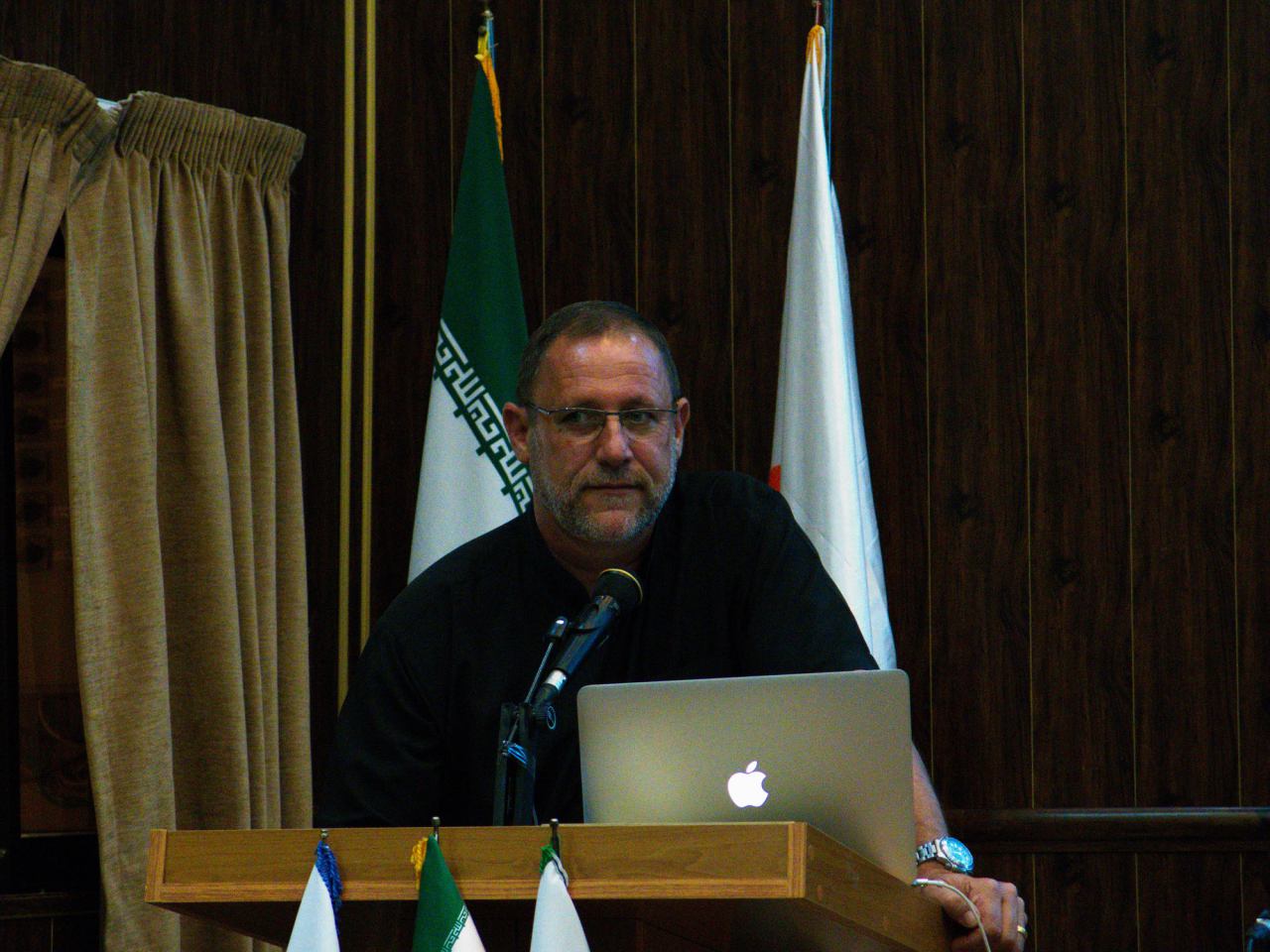
Greetings from Sabah, Malaysia! As the IOSEA Marine Turtle MOU turns 25, Nicolas Pilcher, Executive Director of the Marine Research Foundation (MRF), looks back at the origins of the MOU and shares his vision for the next 25 years.
Nicolas served on the MOU's first Advisory Committee and is now back on the Advisory Committee, leading the Bycatch Working Group. In this message he reflects on a quarter century of shared conversations, joint initiatives and scientific exchange, and highlights the priorities he sees ahead: tackling bycatch, securing large-scale funding, and strengthening information flow through Focal Points.
"Good morning turtle people in the IOSEA region, greetings from Sabah in Malaysia where turtles are also a massive part of our environmental heritage. The MOU turns 25 this year and I remember being in the room when it was signed, after a series of meetings that kicked off in Perth and took us to Kuantan in Malaysia, and finally to Manila, where several countries became founding signatories. And you might not know but the MOU has its roots in what was known as the Sabah Declaration, signed by our then Sabah Minister of Environment, Tan Sri Chong Kah Kiat.
That declaration came on the heels of a meeting convened in Sabah back in June 1999 that called for an agreement that went beyond the waters of just ASEAN, the Association of Southeast Asian Nations, and spanned the migratory reaches of the turtles themselves. Then, with the enthusiasm and drive of Douglas Hykle, the MOU's first Coordinator, just a few years later that dream of a far-reaching international agreement came to be in the form of this IOSEA MOU. Earlier drafts of the agreement and the Conservation and Management Plan were written on my laptop, and I still have copies of all of that to this day.
And it's interesting to look back and see the evolutionary process of the MOU. I served on the first Advisory Committee that the MOU convened, participated in several Meetings of the Signatory States, and now I'm on the Advisory Committee once again and leading the Bycatch Working Group, so you could say I'm rather attached to the MOU. And sea turtles are undoubtedly better off for the MOU: shared conversations, new joint initiatives, technical knowledge exchange, and the provision of the latest scientific data have all enabled Signatory States to advance conservation of not just turtles but also their habitats.
So where will we be in the coming 25 years? Keep in mind the world is changing around us as we speak: wars, political instability, climate change, and greater divides between the haves and the have-nots mean that many turtle conservation efforts are happening under extreme conditions. Financial hardship drives wildlife poaching in many places, turtles are frequently targeted, increased frequency and intensity of storms linked to climate change erodes important nesting habitat, and the list could go on. And yet amongst this challenging backdrop sea turtles are showing us just how resilient they are. The IUCN Red List downgraded the green sea turtle globally to Least Concern in October last year, and that's the first time it's been off the endangered side of the list since 1982, some 44 years ago.
The fear of feminisation of turtle stocks because of climate change has been shown to be less of a concern than originally thought. With turtles having survived multiple warming and cooling periods in their hundred million years, you'd think they were used to a little bit of this heat. Governments are putting more effort into wildlife conservation, so are companies, and the public and multiple NGOs are rallying around to protect turtles, so now is a good time to be a turtle.
But what will the future look like for turtles and the MOU 25 years from now? Well, in jest I could say there might be a cooling period and conservation people might get all worried about a masculinisation of turtle stocks, but on a serious note, other species might rebound much the way green turtles did, more habitat might be set aside for turtle survival, and not just beaches: coral reefs, seagrass beds, even areas on the high seas. Policies might start to reflect that consumptive use of turtles might well be a very valuable conservation tool, arguably a controversial one, but equally one that has documented proof that it works. Just look at Aboriginal take in Australia and the hundreds of thousands of sea turtles that still call it home.
As for the MOU, I see it thinking bigger and better and wider and further. I think large-scale funding that supports conservation efforts across multiple countries and even on the high seas should be a priority. I think tackling bycatch in commercial and artisanal fisheries should be a priority, and as I said, controversially for some, I'd like to see a day when the MOU fully embraces Action 1.5 of the Conservation and Management Plan, whereby consumptive uses are allowed to re-engage coastal communities who have long traditions and cultures linked to sea turtles.
In that way I see the MOU benefiting sea turtles, and people and countries fully engaging with the process, so that the MOU gives them what they hope to get out of it by becoming signatories in the first place. I think there's probably a need for increased information flow through Focal Points from the MOU to all national stakeholders, NGOs, academia, government agencies... and the same way in reverse, so that at meetings the MOU is well informed. It's only with a strong flow of information that the MOU is going to gain strength, and so I call on all of those involved in turtle conservation across the region to communicate widely and publicly, to share challenges, to share experiences, and ultimately to share in the collective success of sea turtle conservation.
Thank you very much."
As we celebrate 25 years of the IOSEA Marine Turtle MOU, we showcase some of the people, initiatives and communities that have contributed to marine turtle conservation across the region. Visit our Story Map to discover their stories.
Gallery images