
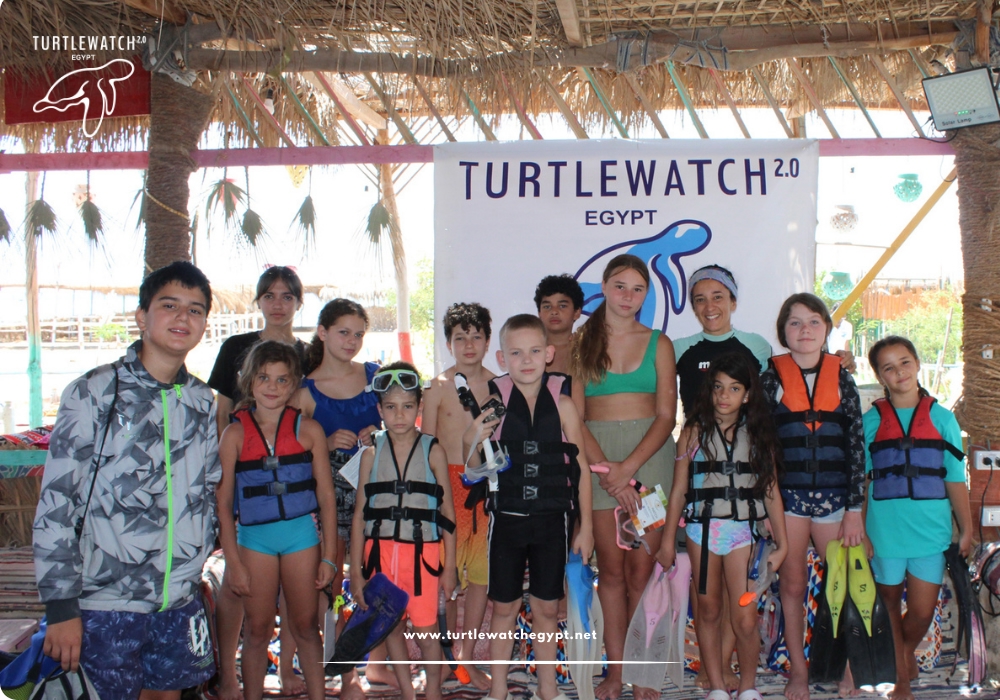
Young Guardians of the Red Sea: Voices from Smith Collins School Hurghada
In Hurghada, on Egypt's Red Sea coast, a group of children has a message for their country. In collaboration with Smith Collins School, Turtle Watch Egypt 2.0 has been working with local students through educational sessions and creative storytelling, helping them become active guardians of the Red Sea.
Now the children want to share what they have learned. In this video, they send heartfelt messages on protecting coral reefs, reducing plastic pollution and safeguarding sea turtles. Their voices highlight the vital role of environmental education in inspiring sustainable habits within coastal communities.
It is a project Turtle Watch Egypt 2.0 is proud to continue, to educate and inspire the next generation about the importance of protecting our seas. The team is proud of the impact the initiative is making, and of the enthusiasm of these young guardians of the Red Sea.
Do you think environmental protection is important for your country? Why?
Laila: “I do think that [environmental protection] is important because without an environment, we will not have anywhere to live and the animals will not have anywhere to live.”
Sonja: “The turtles, for example, will live better on Earth if people don't touch them or hurt them. And if the boats stop going that fast, then maybe the turtles won't get hurt that often.”
Aya: “Without the protection, I think the country wouldn't be so alive and there wouldn't be such beautiful places to stay.”
Why are corals important?
Aya: “Because they help keep the water from flooding the continents. They're beautiful. They help turtles when they need to clean their carapace, and they are home for a lot of fishes.”
Sonja: “The coral reefs protect the shores from fast-moving water, and turtles rub their backs on them. Some turtles eat them.”
Laila: “Corals are important because they are home to many sea creatures.”
How can we help turtles?
Sonja: “We can reduce the use of plastic. If we see plastic bags in the sea, we can take them out, so the turtles will not eat them. Also, if we see boat drivers, we can tell them to slow down, because maybe there's going to be a turtle that wants to breathe air and the boat is just going to run it over.”
Aya: “Stop throwing trash, because it's making the temperature higher and turtles are dying. We shouldn't touch turtles. We shouldn't touch their eggs, babies or adult turtles in the wild. There are jellyfish in the water, and turtles eat them. Plastic bags really look like jellyfish, and turtles eat them and they die. That's why this helps the populations of turtles.”
Laila: “If you swim in the sea and you see some plastic, you can take it and throw it in the bin. That's how you can save the sea.”
What did you enjoy the most during the workshop with Turtle Watch Egypt 2.0?
Sonja: “Swimming and looking at the turtles and the corals.”
Laila: “I enjoyed swimming and looking at corals and turtles the most. I loved listening and learning more information about Red Sea creatures.”
Aya: “I enjoyed the most when I spent time with my friends and teachers.”
Sonja: “My name is Sonja and I go to Smith Collins School.”
Laila: “My name is Laila and I go to Smith Collins School Hurghada.”
Aya: “My name is Aya and I go to Smith Collins School Hurghada, Egypt.”
All children together: “Protect the sea. Protect life!”
As we celebrate 25 years of the IOSEA Marine Turtle MOU, we showcase some of the people, initiatives and communities that have contributed to marine turtle conservation across the region. Visit our Story Map to discover their stories.