Spotlight on the Hawksbill Turtle: New Conservation Status Assessment Now Available
Bonn, 16 June 2023 – On this year’s World Sea Turtle Day, the CMS Secretariat is pleased to launch a new report on the Hawksbill Turtle. The Assessment of the Conservation Status of the Hawksbill Turtle in the Western Pacific Ocean Region presents a synopsis of what is known about hawksbill turtles in the Western Pacific Ocean, including knowledge of nesting and foraging populations and legislative and protection measures across signatory states.
“This latest assessment confirms the need for urgent conservation action to address both take and trade of the species. CMS, IOSEA and the new Hawksbill Single Species Action Plan provide the tools for countries to do so in a coordinated way,” says Amy Fraenkel, Executive Secretary of the Convention on the Conservation of Migratory Species of Wild Animals (CMS).
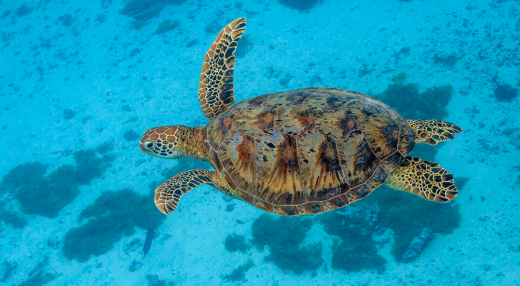
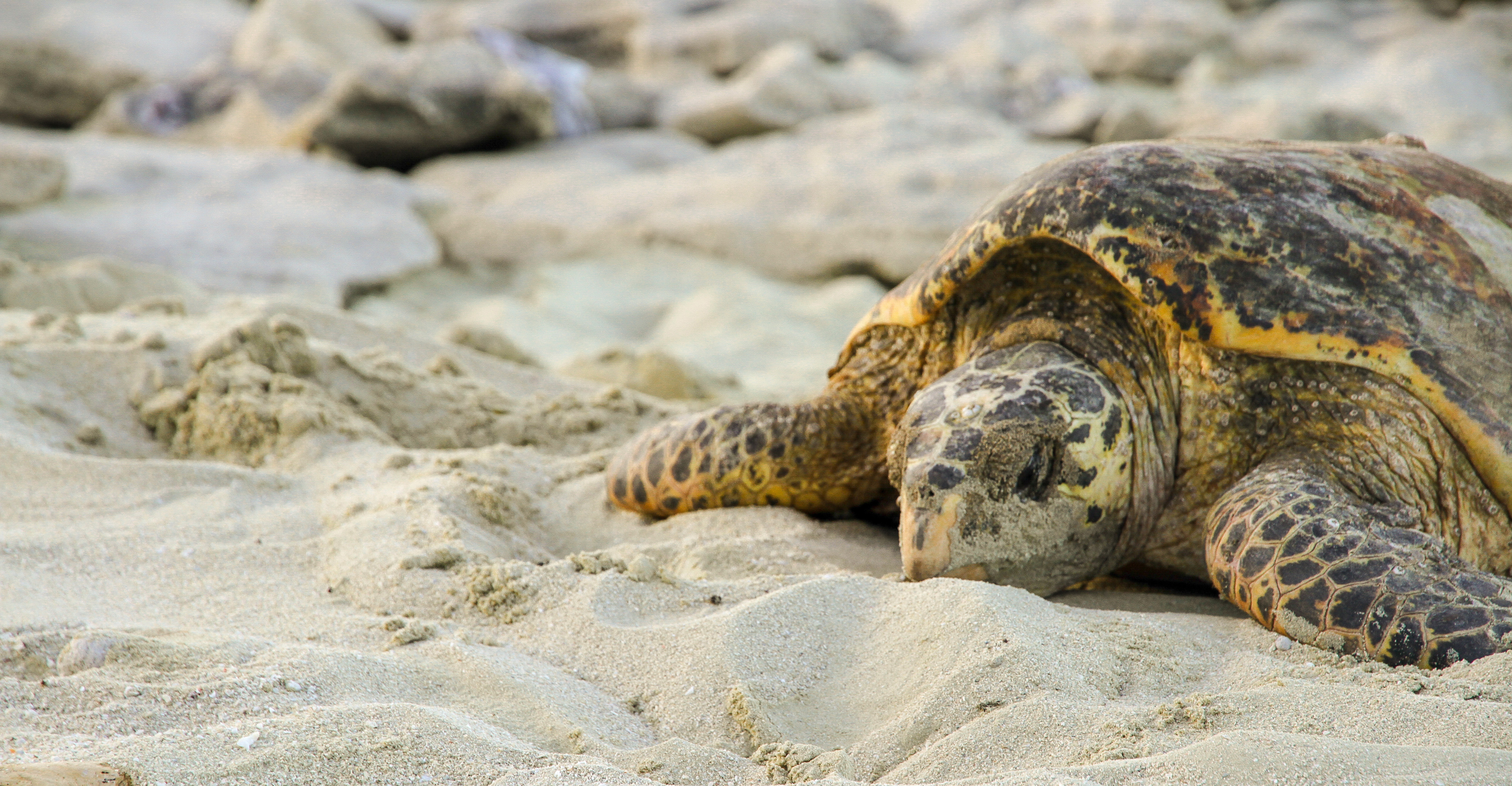
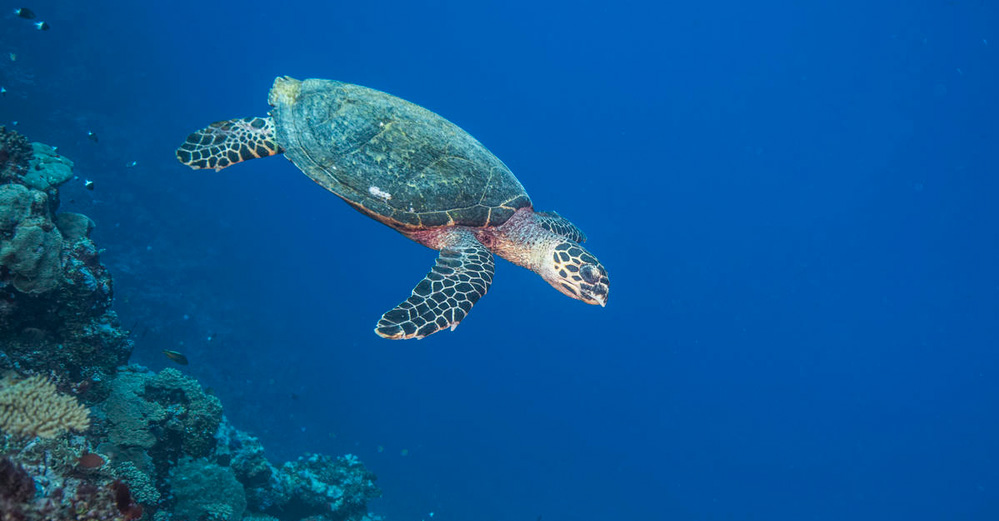
The hawksbill turtle (Eretmochelys imbricata), named for its narrow, pointed beak, is a critically-endangered sea turtle species typically associated with coral reefs and found throughout the world’s tropical oceans. Capable of migrating long distances between nesting beaches and foraging areas, hawksbill turtles are particularly challenging to conserve, due to their cross-border distribution and long-lived nature. As highlighted in this article, there is growing evidence of connectivity between Hawksbill Turtle habitats across the Indian Ocean.
Nesting turtles from different populations often share foraging destinations and migration routes. However, the exact distribution, abundance, biological characteristics, and links between habitats used by turtles at different stages of their life cycle remain major knowledge gaps for most populations.
“With the vast contribution of data by turtle biologists, researchers, community members, government representatives and fisherfolk among others, we have growing information on the status of marine turtle species in the Western Pacific Ocean. This assessment now enables us to identify and address the critical gaps in knowledge that is necessary for conservation,” says Christine Hof, WWF’s Global Lead on Marine Turtle Conservation, and lead author for the assessment.
© Tom Vierus/WWF-US
Collecting and sharing this data is essential for understanding hawksbill population status, distribution and connectivity between countries for effective species management.
The worrying conservation status of this species is mostly due to direct take of its meat and/or eggs by local communities (either commercial or non-commercial) and by native and non-native predators. At the same time, climate change (i.e. increasing beach temperature and beach erosion), coastal development (i.e. urban and industrial, and light horizon disorientation), fisheries impacts — especially trawl and longline fisheries — and entanglement in discarded fishing gear are also having an impact.
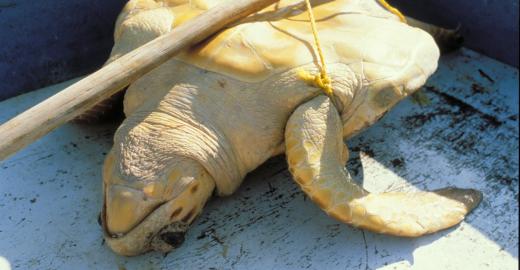
Despite global bans on taking, hawksbill turtles continue to suffer targeted poaching for their carapace, which are made into tortoiseshell products to be sold as trinkets.
Over the last several years, there has been an increased effort under CMS and the Memorandum of Understanding on the Conservation and Management of Marine Turtles and their Habitats of the Indian Ocean and South-East Asia (IOSEA Marine Turtle MOU) to improve the situation for hawksbill turtles in the South-East Asia and Western Pacific Ocean regions.
The latest assessment follows the Assessment of the Conservation Status of the Hawksbill Turtle in the Indian Ocean and South-East Asia Region, published in March 2022 under the leadership of the Advisory Committee of the IOSEA Marine Turtle MOU.
A Single Species Action Plan (SSAP) for Hawksbill Turtle in South-East Asia and the Western Pacific Ocean Region was recently negotiated under the framework of IOSEA and adopted by four countries that are now taking steps to improve the conservation of the species — Cambodia, Myanmar, Philippines and Viet Nam.
This action plan for Hawksbill Turtles will be presented to CMS COP14 to be held in Samarkand, Uzbekistan in October 2023.
The SSAP integrates the actions necessary to address trade and use at both the domestic and the international levels, with the goal ‘to address unsustainable use and trade of hawksbill turtles in the South-East Asia and Western Pacific Ocean region and build resilience in the populations’.
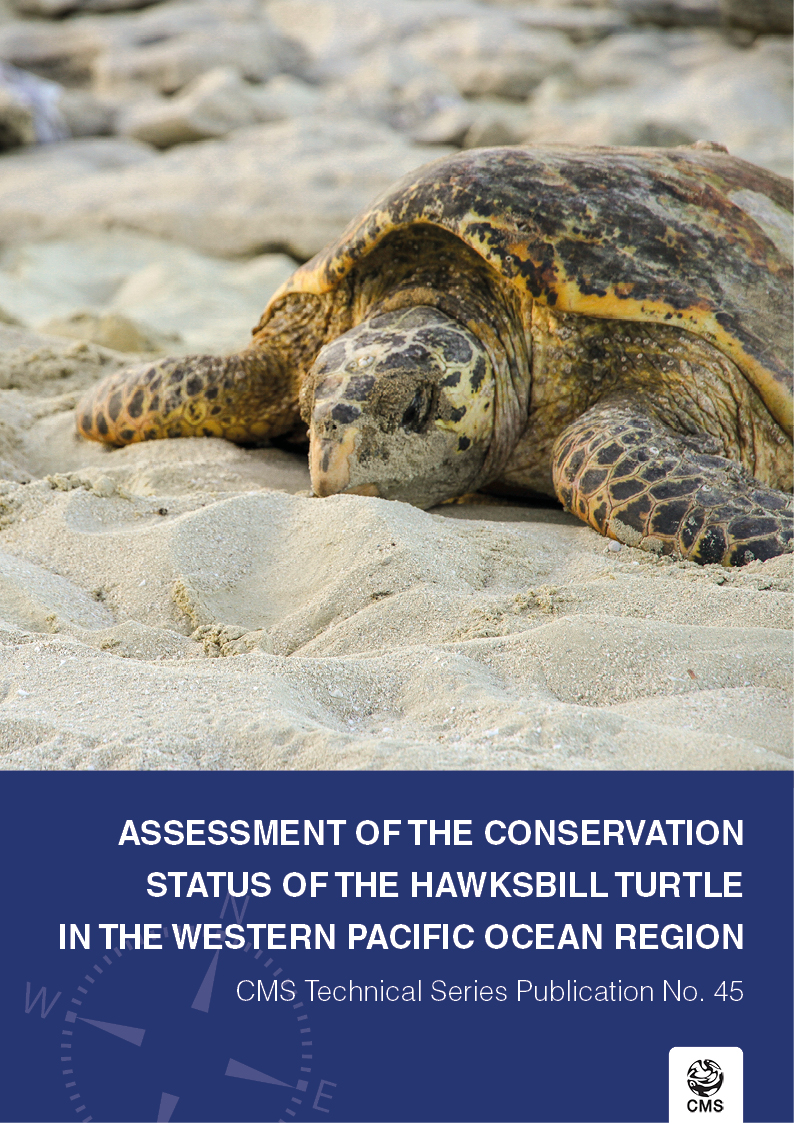
TECHNICAL SERIES REPORT
Assessment of the Conservation Status of the Hawksbill Turtle in the Western Pacific Ocean Region
Download [EN]About the Assessment Report:
The Assessment of the Conservation Status of the Hawksbill Turtle in the Western Pacific Ocean Region is the second CMS scientific assessment focusing on this species. It follows the Assessment of the Conservation Status of the Hawksbill Turtle in the Indian Ocean and South-East Asia Region, published in March 2022 under the leadership of the Advisory Committee of the Memorandum of Understanding on the Conservation and Management of Marine Turtles and their Habitats of the Indian Ocean and South-East Asia (IOSEA Marine Turtle MOU).
The CMS Secretariat engaged a team of experts to review the status of hawksbill turtles in the western Pacific Ocean region, led by the World Wide Fund for Nature (WWF) and the University of the Sunshine Coast. This information will support Pacific countries and territories in implementing objectives of the Single Species Action Plan (SSAP) for Hawksbill Turtle in South-East Asia and the Western Pacific Ocean Region as well as the updated Regional Marine Species Action Plans 2022-2026 (SPREP, 2022), specifically the Marine Turtle Action Plan.